 English
 Français
 Deutsch
 Italiano
 Español
 Português
In 1692, a wave of accusations transformed a small New England community into the setting for one of colonial America’s most notorious episodes of persecution. The Salem trials are often retold as a tale of witches, but a careful history distinguishes what people believed from what the records can establish. This article follows the crisis, its legal failures and the ways later generations turned Salem into a symbol of fear directed at the unseen.
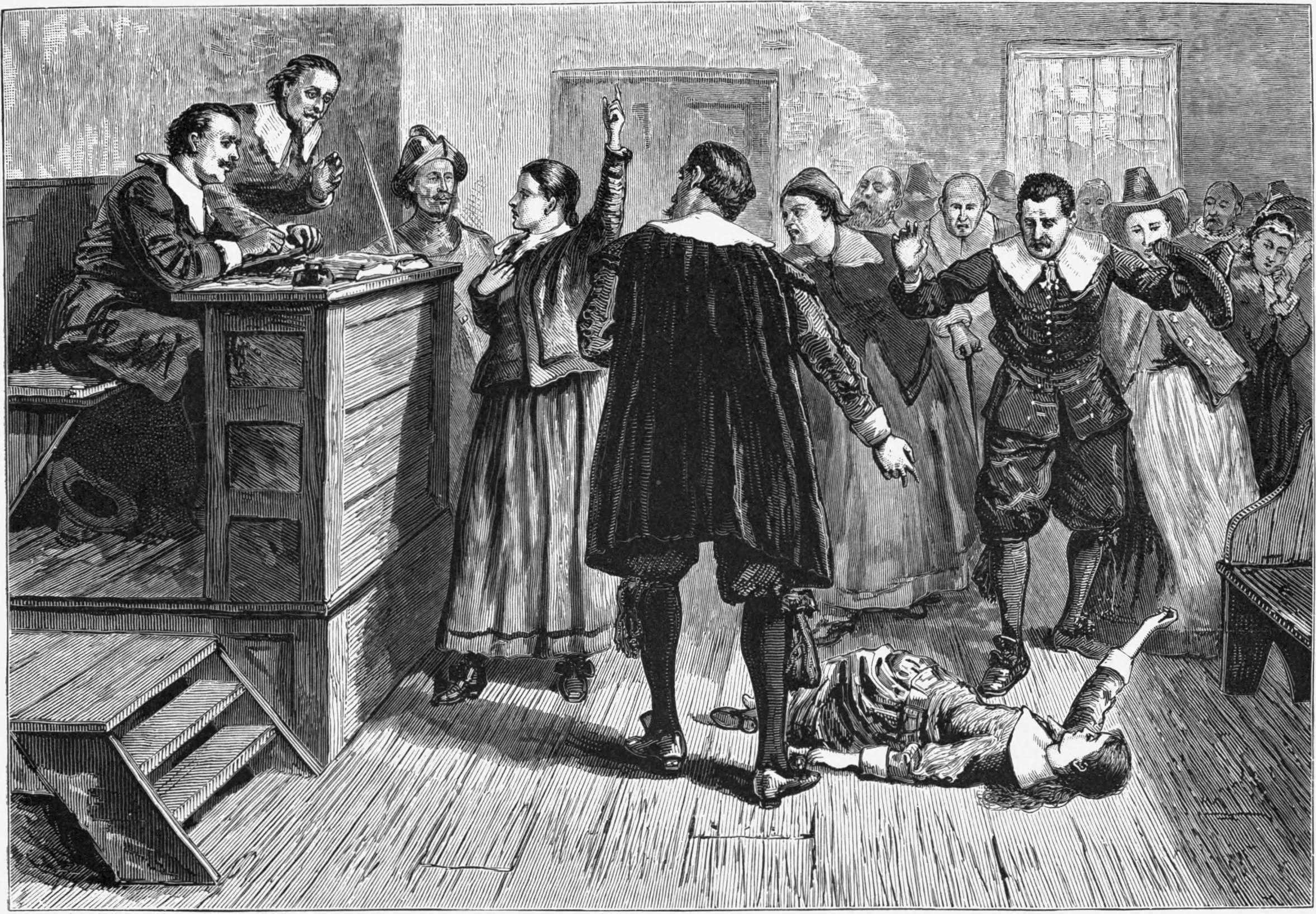
The historical event
Salem was part of the Massachusetts Bay Colony, a Puritan society in which religion shaped public authority and daily life. The community was under pressure: political rules had recently changed, the colony was adjusting to a new charter and governor, and disputes over land, status, church leadership and local authority strained relationships. New England colonists also lived amid recurring warfare and insecurity. Historians do not reduce the outbreak to one cause. Such conditions help explain vulnerability to suspicion, but they do not prove a single trigger.
In January 1692, several young girls in the household of Reverend Samuel Parris experienced fits and frightening sensations. Explanations moved quickly from illness and conflict toward witchcraft. On 1 March, authorities examined Sarah Good, Sarah Osborne and Tituba, an enslaved woman in the Parris household. The examinations and surviving testimony show how the accused were asked to respond within a world that treated demonic danger as real. Tituba’s confession, made under coercive conditions, described a covenant with the Devil and fed the accusations; it should not be treated as independent proof that supernatural events occurred.
Claims multiplied through the spring. The colony’s new governor, William Phips, established the Court of Oyer and Terminer in May. Its presiding chief justice, William Stoughton, permitted “spectral evidence”: testimony that an accused person’s apparition had attacked someone in a dream or vision. Such claims were almost impossible for defendants to disprove. Confession could also bring more lenient treatment, while naming others helped accusations spread. The court’s procedures mixed ordinary testimony, physical examinations for supposed marks and claims about invisible harm, making fear appear to carry the weight of evidence.
Bridget Bishop was executed in June. By autumn, more than 150 people had been accused or jailed across Salem and nearby communities. Nineteen people were hanged; Giles Corey, who refused to enter a plea, was pressed to death; and several others died in prison. These were not merely abstract numbers: families lost relatives, property and security, while people who confessed under pressure faced lasting stigma. Men as well as women were accused, although women were especially exposed to gendered suspicions about independence, reputation and social conformity.
Opposition grew as the proceedings widened and the weakness of spectral evidence became harder to ignore. On 29 October 1692, Phips dissolved the special court. The remaining cases were heard in 1693 by a different court that did not admit spectral evidence in the same way; convictions collapsed, and the governor pardoned the remaining prisoners. Massachusetts later passed legislation restoring the legal standing and good names of some of the accused, beginning in 1711, with further corrections centuries later. The state archive preserves the warrants, examinations, depositions and court records, allowing readers to compare the public story with the imperfect documentary record.
Salem’s significance lies not in proof of witchcraft, but in how social stress, religious certainty, rumor and a defective legal process reinforced one another. The “esoteric” dimension belongs to the beliefs people held and the invisible forces they feared. It does not establish that accused people practiced magic or that spirits caused the crisis. Later art and popular culture often made the story dramatic; historical method asks us to keep testimony, interpretation and speculation distinct.
A Feng Shui reading of Salem’s place
Feng Shui did not cause, shape or historically influence the Salem trials; it belongs to a different cultural and intellectual tradition. Any connection here is a contemporary interpretive lens, not a claim about Puritan beliefs. Feng Shui asks how people, buildings, paths, light, orientation and surrounding terrain interact. Applied carefully, it directs attention to the lived environment in which fear circulated: homes, meeting places, courtrooms and routes between them.
In a Feng Shui vocabulary, a room that feels constricted, poorly lit or difficult to navigate may heighten discomfort, while a clear path, balanced light and a stable place to sit can support calm attention. These are practical observations about experience, not an explanation for mass accusations. The deeper parallel is the responsibility to notice how environments shape perception. When authority concentrates in a tense room and frightened witnesses are treated as certain, the space can reinforce a single narrative instead of allowing careful questioning.
A modern remembrance space can use Feng Shui principles ethically: create an accessible entrance, offer unobstructed movement, balance quiet areas with places for conversation, use gentle light and include names or records that restore individuality to those accused. Water, plants or natural materials may suggest renewal, provided they do not turn tragedy into decoration. The Five Elements can be used symbolically to balance reflection, clarity and compassion, not to diagnose events or assign blame.
Read this way, Salem invites a question about balance between fear and discernment. Feng Shui’s emphasis on relationship between people and place can encourage communities to design spaces that help visitors pause, compare evidence and remember human consequences. It cannot validate supernatural accusations. It can, however, offer a thoughtful language for creating environments in which listening, fairness and care are easier to practice.
Sources
- Library of Congress, “Witchcraft in Salem”
- Massachusetts Archives, “The Trials”
- Massachusetts Archives, Salem Witch Trials Papers
What Is Feng Shui? — Explore the basics and ask questions in our forum.