 English
 Français
 Deutsch
 Italiano
 Español
 Português

The discovery that transformed religious history
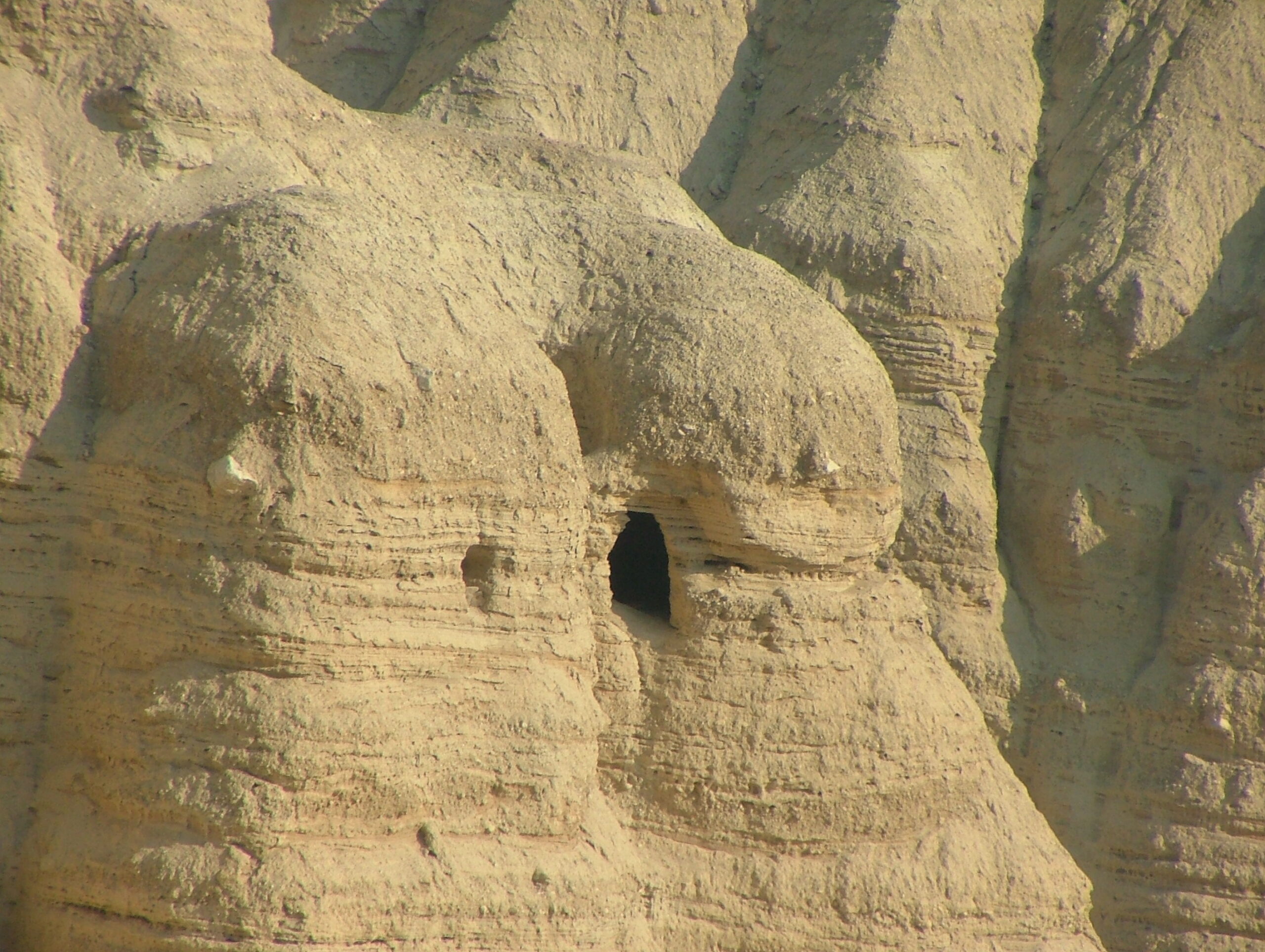
In 1947, Bedouin shepherds brought ancient manuscripts out of a cave near Qumran, above the northwestern shore of the Dead Sea. Accounts differ over the precise sequence and date of the first find, but the discovery of seven scrolls became the beginning of an extraordinary international archaeological story. Manuscripts that had remained inaccessible for centuries entered networks of antiquities dealers, scholars and museums. Their emergence transformed the study of ancient Judaism and the religious world from which Christianity developed. The importance lay in surviving evidence, rather than the confirmation of a modern supernatural legend. [1, 2]
The initial discovery encouraged further searches by Bedouins and archaeologists. Between 1947 and 1956, eleven caves in the Qumran area yielded manuscripts and thousands of fragments. Researchers faced the painstaking work of identifying scripts, joining pieces and distinguishing different copies of the same composition. Palaeography, archaeology and radiocarbon analysis helped establish their antiquity. The collection broadly belongs to the last centuries BCE and the first century CE. These are ancient Jewish writings: describing them simply as secret Christian gospels would distort both their contents and their historical setting. [1, 3]
The texts include biblical manuscripts, scriptural interpretation, communal regulations, hymns and calendrical works. The Great Isaiah Scroll is especially celebrated, but the wider collection matters because it reveals a varied religious landscape. Different textual forms and interpretations circulated alongside works absent from the later Hebrew Bible. Some compositions concern purity, lawful conduct and collective worship; others express expectations of divine intervention. This diversity makes the scrolls more informative than a single supposed revelation. They help historians investigate how communities read sacred writings, organised daily life and understood their place within a larger cosmic order. [2, 3]
The esoteric dimension is particularly visible in specialised calendars and interpretations of prophecy. The Israel Antiquities Authority explains that some calendrical manuscripts use cryptic writing, possibly indicating restricted knowledge. A prominent scheme organises 364 days into four seasons of thirteen weeks. Such arrangements connected worship with an ordered understanding of time. The pesharim, or interpretive commentaries, applied prophetic passages to the experience of a community and its expectations of the end of days. These documents demonstrate ancient beliefs about concealed meaning; they do not demonstrate that their predictions or supernatural explanations were objectively correct. [3]
Who assembled and concealed the manuscripts remains a research question. Many scholars associate Qumran and some sectarian writings with the Essenes, but the exact relationship between settlement, inhabitants and the entire collection is debated. The Community Rule describes disciplined communal membership, while archaeological evidence supplies a different, complementary perspective. A responsible account distinguishes the manuscripts’ own claims from modern reconstructions. Neither every fragment nor every cave needs to have the same history, and uncertainty should remain visible wherever evidence cannot settle the question. [4]
The discovery therefore has worldwide significance beyond the fascination of a hidden cave. It changed the evidence available for studying scripture, religious diversity and the transmission of knowledge. It also made conservation and access central responsibilities: fragile materials cannot survive unlimited handling. Modern readers can admire the manuscripts without turning them into proof of a single timeless secret. Their strongest invitation is to read patiently, compare interpretations and preserve the physical contexts through which human ideas endure.
A Feng Shui reading: shelter, rhythm and shared knowledge
Feng Shui can illuminate this event through comparison with its concern for the relationship between people, landscape and dwelling. There is no established historical evidence here that the scrolls’ custodians practised Chinese geomancy. The interpretation that follows is philosophical, not an explanation of why the manuscripts were discovered. Without a measured site survey, compass bearings or a defensible construction date, assigning a bagua sector or Flying Stars chart would be speculation.
From a landscape perspective, the caves suggest enclosure, backing and protection. The desert also makes exposure and scarce resources impossible to ignore. A Feng Shui reflection asks how a place supports continuity while remaining usable. Physical preservation, however, requires material explanations: aridity and sheltered storage helped delicate manuscripts survive. Qi belongs to a traditional interpretive vocabulary; it is not a substitute for humidity control, conservation science or archaeological evidence.
Yin and yang offer a useful analogy for the archive’s changing life. Darkness, stillness and concealment evoke yin; discovery, study and circulation evoke yang. Neither condition is automatically preferable. Complete concealment protects objects but restricts learning, whereas uncontrolled exposure can destroy what people wish to understand. Balance means careful access. Likewise, the scrolls’ ordered calendars invite reflection on rhythm, without making their religious system equivalent to Chinese cosmology.
At home, apply this lesson to a reading or meditation corner: choose a supported seat, comfortable light, clear circulation and stable storage. Protect paper from damp and direct sunlight. Let the setting encourage attentive study and conversation. The practical aim is a space that preserves knowledge while welcoming its responsible exchange.
Sources and further reading
- Library of Congress — Scrolls from the Dead Sea: Introduction
- Israel Museum — The Faces behind the Scrolls
- Israel Antiquities Authority — The Scrolls’ Content
- Library of Congress — The Qumran Community
Let’s discuss about this here…
What Is Feng Shui? — Explore the basics and ask questions in our forum.