 English
 Français
 Deutsch
 Italiano
 Español
 Português
A city transformed by catastrophe
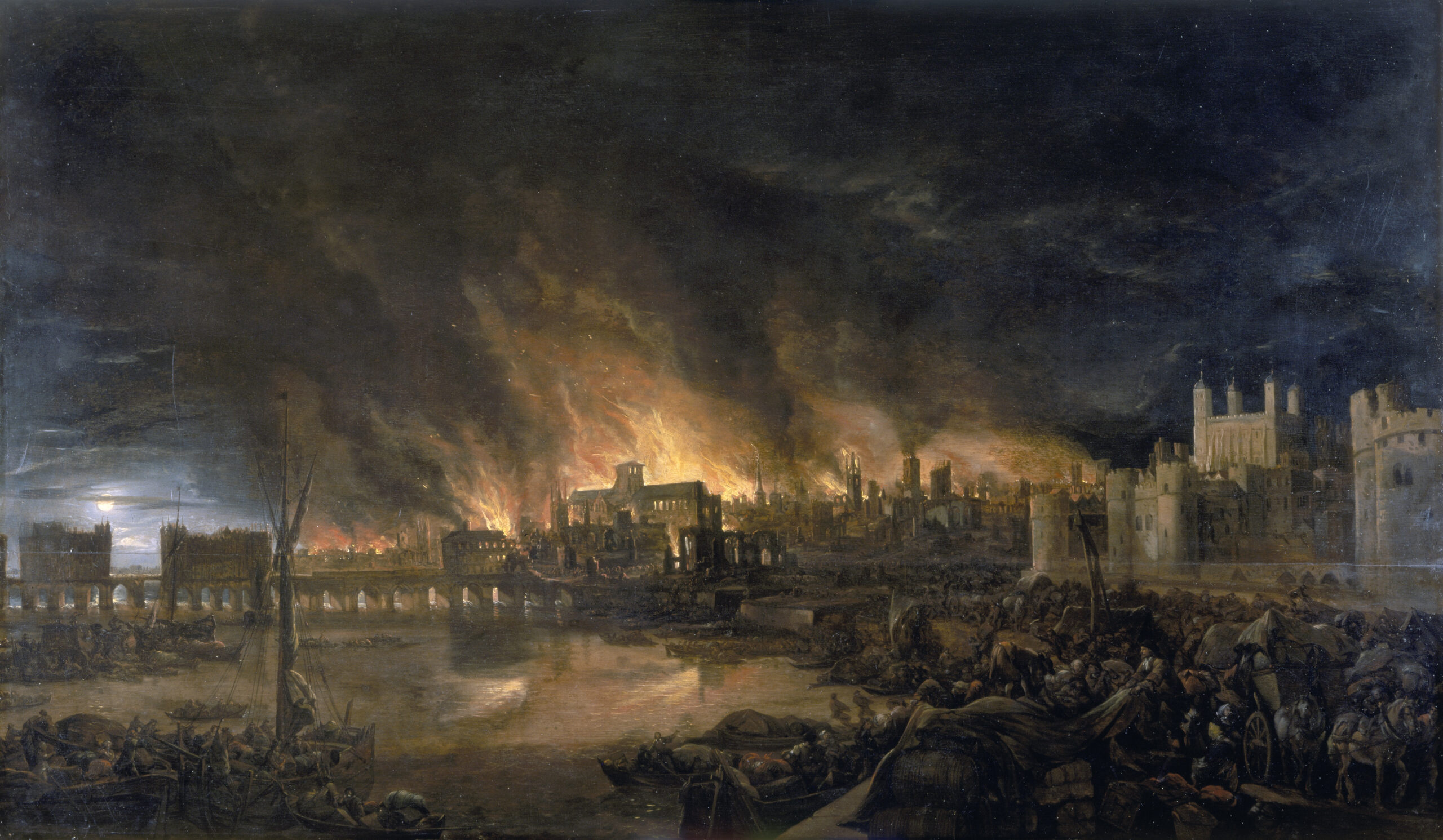
Between 2 and 6 September 1666, the Great Fire devastated the City of London [1]. It began in Thomas Farriner’s bakery in Pudding Lane; dry conditions, strong winds, combustible buildings, and limited firefighting capacity helped it spread [2]. This event became a lasting reference point in the history of urban disaster and reconstruction. Its esoteric interest lies in the questions it raises about order, vulnerability, and renewal.

Why connect this event with Feng Shui?
Feng Shui considers how people inhabit a setting through its forms, orientation, surroundings, and relationships. London’s disaster makes these relationships painfully visible: a building belongs to a street, a street to a neighbourhood, and each household to a wider network of support. There is no historical claim here that London was designed according to Feng Shui, or that geomancy explains the fire. This is a contemporary philosophical interpretation across cultures.
The Five Phases: relationships before labels
The traditional Five Phases—Wood, Fire, Earth, Metal, and Water—describe dynamic relationships. In the generating cycle, Wood nourishes Fire; in the controlling cycle, Water checks Fire. London’s wooden fabric and flames make this symbolism striking, but timber combustion is a physical process, not proof of the cosmological model. The useful interpretive move is to ask when a supporting relationship becomes excessive and which counterbalancing capacities have been neglected.
In a reflective urban reading, Wood suggests expansion and living development; Fire, intensity and transformation; Earth, stability and shelter; Metal, discernment and boundaries; Water, adaptation and reserves. These associations cannot calculate disaster risk. They can, however, expose a one-sided vision of prosperity that celebrates activity while overlooking maintenance, protection, and the capacity to recover.
Qi and the difference between movement and nourishment
Qi is a traditional concept of vital process, not a measured quantity of airflow. Used carefully as an interpretive vocabulary, it directs attention to how a place supports life. Busy commercial streets may appear vigorous, yet intensity alone says little about their resilience. A nourishing city also needs access, usable shared space, and dependable connections between those who need help and those able to provide it.
The lesson is therefore more subtle than “increase flow.” Wind can spread fire; uncontrolled movement can become destructive. Equally, blocked passage can hinder escape or assistance. A balanced reading asks which flows should be encouraged, slowed, redirected, or interrupted. Feng Shui’s concern with relationships becomes valuable when it prompts specific observations rather than an indiscriminate preference for openness.
Yin and yang: recovery belongs within urban life
Fire’s heat, brightness, and rapid expansion suggest an extreme yang condition in this symbolic reading. Cooler shelter, stillness, and recuperation evoke relatively yin qualities. Neither tendency is inherently moral: warmth sustains life, while excessive enclosure can isolate it. Harmony means responding to circumstances, not achieving an unchanging half-and-half arrangement.
After catastrophe, the quieter work of restoring shelter and ordinary routines deserves as much attention as monumental rebuilding. This is an ethical application of the philosophy, not a claim about the intentions of seventeenth-century planners. A renewed skyline cannot by itself tell us whether residents have regained security, belonging, or a meaningful voice in their surroundings.
Rebuilding: give symbolic balance a material foundation
UK Parliament records that the rebuilding legislation passed in February 1667 required new buildings to use brick or stone and regulated building heights [3]. These were practical institutional responses to vulnerability. Calling brick “Earth” may create a memorable analogy, but the protection comes from material properties, construction, and enforceable standards, not from naming an element.
Likewise, a Feng Shui reading should never recast destruction as a necessary cleansing or blame residents for supposedly inauspicious homes. Loss is not evidence of spiritual failure. The responsible question is what rebuilding owes to those who lived through the event. Balance becomes meaningful when resources, protection, and opportunities to return are considered alongside architectural ambition.
A thoughtful practice of renewal
For today’s shared spaces, begin by observing how people enter, move, pause, and find support. Identify congestion, overlooked maintenance, and places where someone can rest without being excluded. Pair symbolic reflection with competent practical assessment. Ask users what helps them feel oriented and secure; do not infer their experience solely from a plan or a compass direction.
London in 1666 offers no evidence that esoteric forces determined history. It offers a powerful occasion to interpret interdependence. Through Feng Shui, renewal can mean restoring relationships among activity and refuge, growth and limits, individual homes and collective responsibility. The most convincing harmony is one that people can inhabit, maintain, and share. This also changes how we understand auspiciousness: as a question about the quality of relationships rather than a guarantee of good fortune. A beautiful entrance has limited value if people cannot use it comfortably, while an ordinary courtyard may support harmony through shade, welcome, shared care, and room for different daily needs.
Discuss this article in the forum
Sources
- Historic Royal Palaces — The Great Fire of London and the Tower
- The Great Fire of London — The fire (London Museum and heritage partners)
- UK Parliament — An Act for rebuilding the City of London
What Is Feng Shui? — Explore the basics and ask questions in our forum.