 English
 Français
 Deutsch
 Italiano
 Español
 Português
In 1421, Yongle established Beijing as the Ming capital. Historian Shih-shan Henry Tsai documents this decision in Perpetual Happiness [1]. This major event in world history offers an unusually rich setting for exploring an esoteric question: can the arrangement of space connect human government with a wider cosmic order?
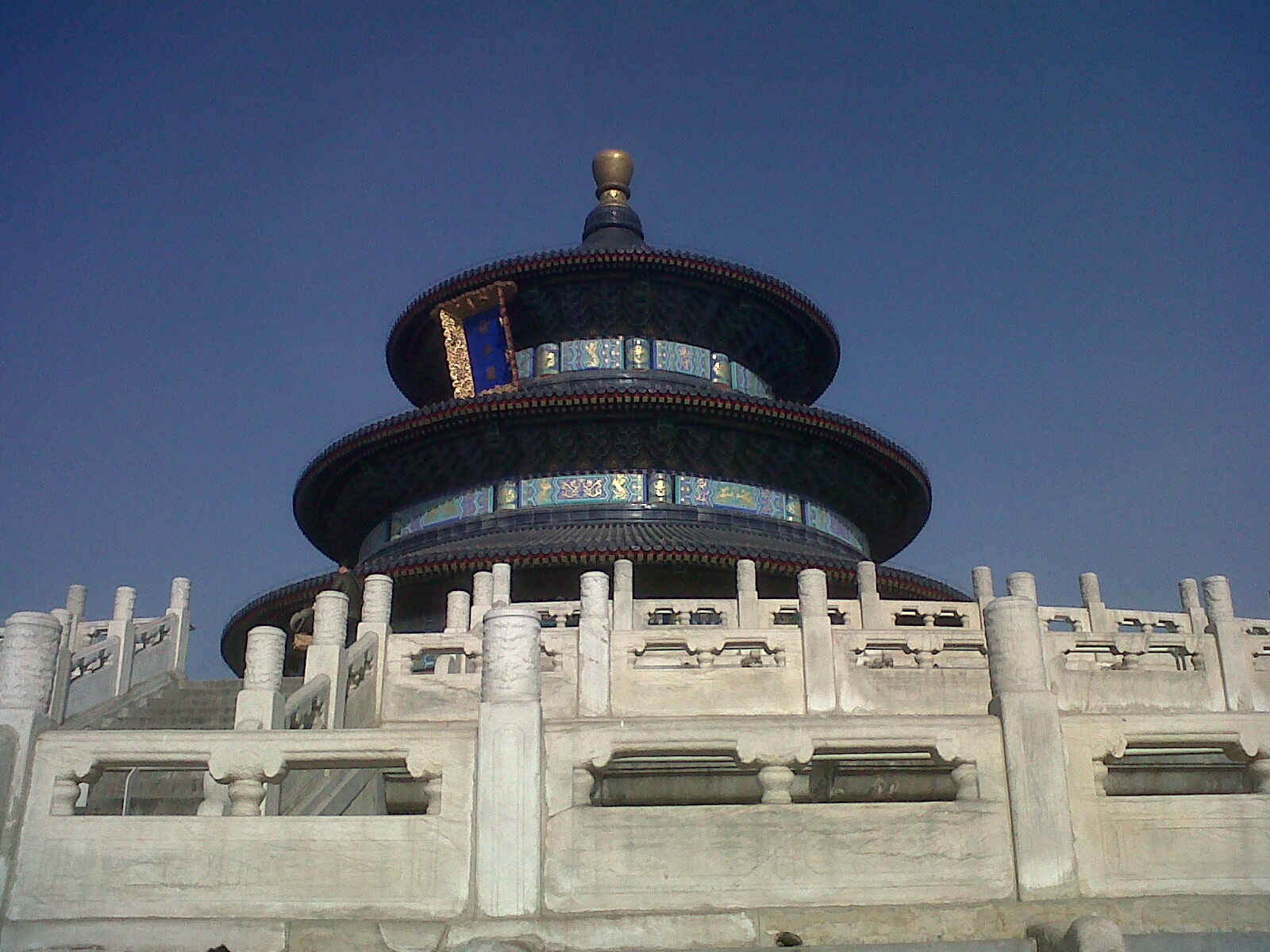
The Temple of Heaven, initially completed in 1420 [2], provides a useful starting point. UNESCO identifies heaven–earth relationships as central to its symbolism [3]. The following analysis is a contemporary philosophical reading through Feng Shui, not evidence that invisible energies caused the move or determined the dynasty’s fortunes. Imperial ritual, political authority, and Feng Shui overlap in their concern with order, but they are not interchangeable traditions.

Why Feng Shui is relevant
Feng Shui asks how location, orientation, form, and surroundings shape relationships between people and place. Moving a capital changes all four. Read through this philosophy, Beijing’s establishment becomes more than relocating offices: it becomes an attempt to give collective life a legible centre. The esoteric dimension lies in correspondence, the idea that visible arrangements can express less visible patterns of meaning.
This connection does not require claiming that every architectural choice followed a single geomantic manual. Rather, we can ask what a ceremonial landscape teaches participants to notice. Where do they pause? What appears central? Which movements feel permitted? Such questions connect symbolic order with bodily experience, while leaving the historical reasons for individual decisions open to documentary investigation.
Qi: circulation and nourishment
In traditional discourse, qi names a vital, dynamic aspect of existence. In this interpretation, it offers a vocabulary for considering whether a capital gathers and sustains life. A city depends on supplies, communication, accessible routes, and places of rest. Thinking about qi encourages attention to these relationships rather than treating a palace as an isolated object whose beauty guarantees prosperity.
However, material circulation and qi should not be equated scientifically. Food delivery is measurable; a claim about auspicious energy needs a different kind of justification. The useful philosophical question is whether spatial organisation nourishes the whole community. A magnificent ceremonial centre would represent incomplete harmony if the people supporting it experienced exhaustion, exclusion, or insecurity.
Yin and yang: authority needs receptivity
Yin and yang describe interdependent tendencies rather than a contest between good and evil. Here, public ceremony, visibility, and decisive action can be read as relatively yang; stillness, shelter, reflection, and recovery as relatively yin. A capital cannot remain healthy through display alone. Its active institutions require quieter conditions that allow people to recover and consider consequences.
Applied to the 1421 event, this perspective raises a critical question: does establishing a powerful centre create reciprocal balance, or merely concentrate control? This is our interpretive question, not a documented statement by Yongle. Harmony becomes ethically meaningful only when the ruler’s demand for order is considered alongside the population’s need for stability and agency.
Heaven and earth: interpreting sacred geometry
The Temple of Heaven invites reflection on the relationship between cosmic aspiration and earthly responsibility. Its sacred symbolism can be read as a reminder that human authority belongs within a larger order. Yet the same symbolism may also legitimise hierarchy. An emperor presented as a mediator occupies a privileged position; architecture can make that privilege feel natural and inevitable.
A careful Feng Shui reading therefore asks two questions together: what relationship does the place express, and who benefits from that expression? Feeling awe is not proof that an institution is just. Likewise, identifying meaningful geometry does not demonstrate supernatural protection. The value of the reading lies in making the relationship between environment, attention, and power more visible.
The Five Phases: a model of relationships
Wood, Fire, Earth, Metal, and Water can be used as a traditional language of changing relationships. In a modern reflective exercise, growth resembles Wood, public expression Fire, support Earth, boundaries Metal, and adaptation Water. These are interpretive analogies, not historical labels assigned to the 1421 relocation, and they should not become a simplistic colour prescription.
A city that privileges expression but neglects support suggests an imbalance in this exercise. Equally, rigid boundaries without adaptability may prevent renewal. The point is to examine interactions: does expansion strain resources, do rules protect people, and can institutions respond to changing needs? The framework is most useful when it generates better questions rather than confident predictions.
A practical lesson for shared spaces
For a home, workplace, or community forum, begin with observation. Identify the centre of activity, examine the route into it, and ask whether newcomers can find their way. Provide room for both conversation and retreat. Consider whose comfort the arrangement serves. Change one feature, then listen to people’s experience instead of attributing every improvement to unseen forces.
Beijing in 1421 ultimately offers a lesson about the responsibilities of creating a centre. Feng Shui philosophy can illuminate relationships among setting, movement, symbolism, and human needs. It cannot establish why an empire succeeded or failed. Read with that distinction, the historical event becomes an invitation to pursue harmony through attentive design, reciprocal care, and critical awareness of power.
Discuss this article in the forum
Sources and historical context
- Shih-shan Henry Tsai, Perpetual Happiness, chapter 6, University of Washington Press [1].
- Visit Beijing: Temple of Heaven [2].
- UNESCO World Heritage Centre: Temple of Heaven [3].
What Is Feng Shui? — Explore the basics and ask questions in our forum.