 English
 Français
 Deutsch
 Italiano
 Español
 Português
Floods and Feng Shui: news reviewed on 15 October 2026. Analysis and interpretation are identified separately from reporting.
On 14–15 October, flooding disrupted Istanbul and closed schools [1]. Tripoli also experienced fatal flooding on 13 October [2]; Hurricane Simon brought flooding to Mexico’s Pacific coast on 12 October [3]. These separate events frame a shared sociological question: what makes a home genuinely protective? The 13 October disaster-risk observance used UNDRR’s theme, ‘Resilience Starts at Home’ [4].

Floods and Feng Shui: a contemporary interpretation
Why floods and Feng Shui belong in the same conversation
The connection begins with place. Feng Shui is a Chinese tradition concerned with siting and relationships between people and surroundings; its name joins wind and water [5]. This article offers a contemporary interpretation, not a traditional diagnosis of the affected cities. A flood cannot be explained by furniture, personal virtue or invisible punishment. Weather and hydrology require scientific investigation. The useful philosophical question is different: have we organized habitation in ways that notice the landscape, accommodate change and protect life? That question reaches beyond an attractive room to the street and watershed supporting it.
Water: life becomes danger when its context changes
Water nourishes gardens, sustains households and connects settlements. During a flood, the same substance can destroy the conditions that make home possible. A Feng Shui reading can hold those qualities together without treating water as either universally auspicious or inherently hostile. Context matters: speed, volume, boundaries and the capacity of a place to receive movement. Applied as an ethical lens, this asks whether urban development makes room for water or merely transfers it elsewhere. It also asks who lives downstream of decisions made by people with greater property, influence and freedom to relocate.
Qi as a question about circulation
Qi belongs to a traditional account of vitality. Here, its use is explicitly metaphorical: a prompt to examine how a city circulates water, people, information and assistance. A clear entrance means little if the public route beyond it becomes impassable. A warning means little if someone cannot understand it or leave work. This interpretation widens attention from private possession to interdependence. It does not equate qi with electricity, hydraulic pressure or a measurable physical field. Those distinctions preserve both intellectual honesty and the possibility of learning from a cultural vocabulary without claiming scientific validation for it.
Yin and yang: room for rest, capacity for action
Read as complementary tendencies, yin and yang suggest that protection requires both receptive space and organized response. A city needs places to pause, absorb and recover, alongside the capacity to communicate and mobilize. Constant expansion can remove the very margin that makes adaptation possible. Conversely, a beautiful quiet courtyard offers little protection if public services cannot act. For this week’s events, the philosophical lesson is to value unglamorous readiness alongside visible construction. Maintenance, rehearsal and listening deserve a place in the idea of prosperity, even when they produce no spectacular building or photograph.
The Five Phases as a checklist, not an explanation
A modern reflective exercise can use the Five Phases to distribute attention: Water for movement; Wood for renewal; Fire for urgency; Earth for support; Metal for organization. These associations form an editorial checklist, not a hydraulic model or a claim that an elemental imbalance caused the storms. Ask five questions: where can movement go, what can recover, who acts, what provides shelter, and which responsibilities are clear? The value lies in preventing a narrow response. A repaired drain, for example, should invite questions about upkeep, access and accountability rather than symbolize a completed cure.
The sociological limit of a private solution
A household with savings can sometimes choose a different dwelling, replace damaged belongings or take time away from work. Another household may have none of those options. This comparison is an analytical scenario, not a claim about every resident in the reported cities. It reveals why advice to create harmony can become unjust if it ignores money and power. Renters may lack authority to alter a building; informal workers may lack paid leave. An interpretation concerned with human flourishing must ask what institutions owe people whose exposure is shaped by circumstances they cannot privately rearrange.
From symbolism to a practical public conversation
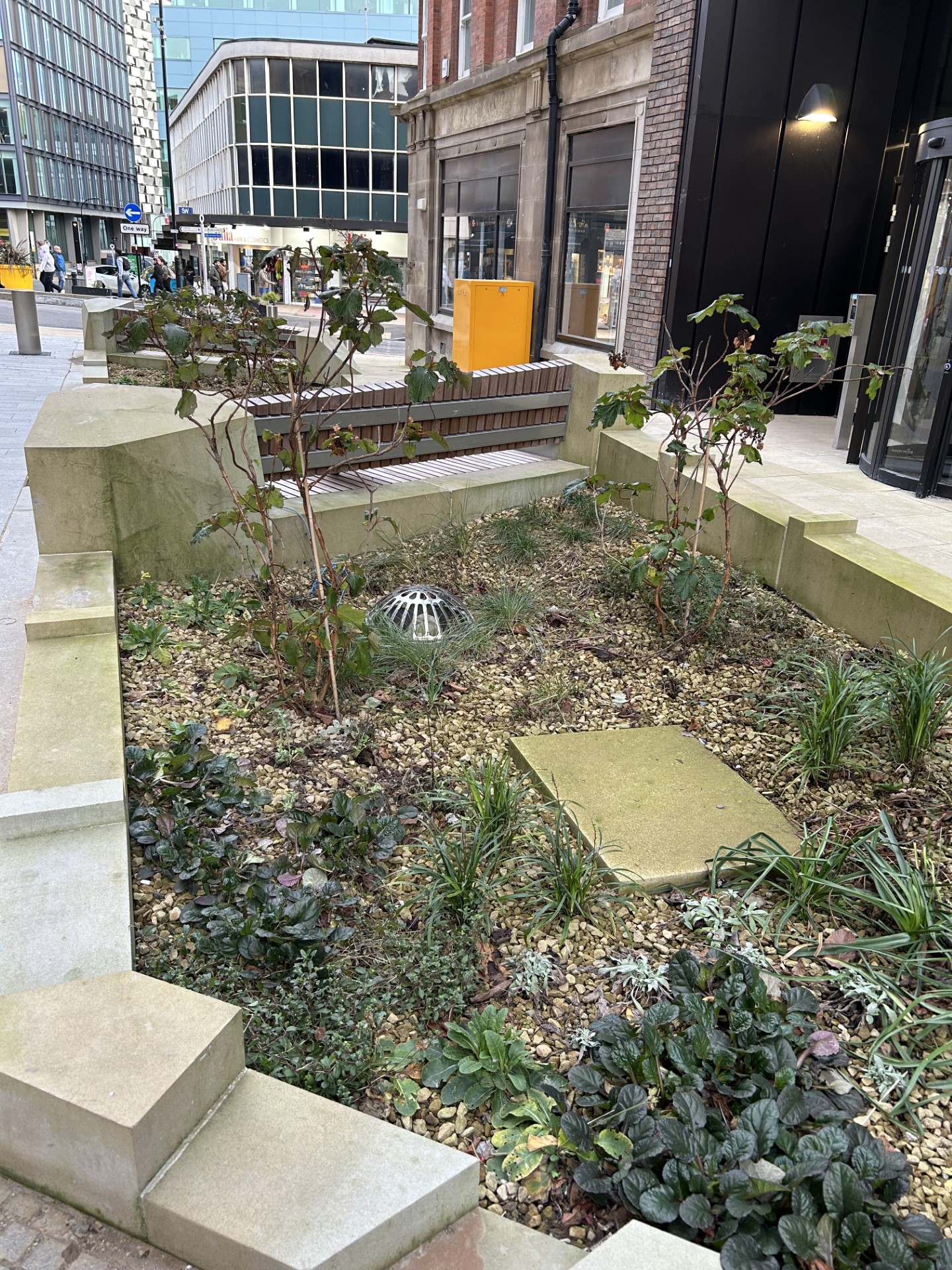
The EPA describes rain gardens and vegetated swales as ways to collect or slow runoff [6]. That provides one concrete bridge between attention to landscape and tested design. It does not establish that a particular installation would have prevented these disasters. Site conditions, engineering, maintenance and extreme rainfall determine performance. The Sheffield photograph illustrates a possibility, not a universal prescription. At community level, residents might ask how drainage decisions are reviewed, whose concerns are heard and where public responsibility begins. These questions translate care for place into deliberation, rather than selling decorative objects as protection.
What a harmonious home asks of the city
For this reading, harmony is a relationship that must survive disagreement and changing conditions. It includes the dignity of people who need assistance, the visibility of overlooked risks and the willingness to revise development choices. The home’s threshold is therefore social as well as architectural: neighbours, institutions and shared spaces help determine whether shelter works. Feng Shui contributes a language of attentive placement; sociology asks who controls that placement and bears its consequences. Read together, they invite compassion without blame and practical accountability without pretending that symbolism predicts a storm. A supportive home ultimately belongs within a supportive public world.
Sources and reading
- AP — Istanbul, 15 October 2026
- Reuters — Tripoli, 13 October 2026
- Reuters — Mexico, 12 October 2026
- UNDRR — Disaster Risk Reduction Day 2026
- Spurlock Museum — Fengshui
- US EPA — Green infrastructure
Let’s discuss about this here….
What Is Feng Shui? — Explore the basics and ask questions in our forum.