 English
 Français
 Deutsch
 Italiano
 Español
 Português
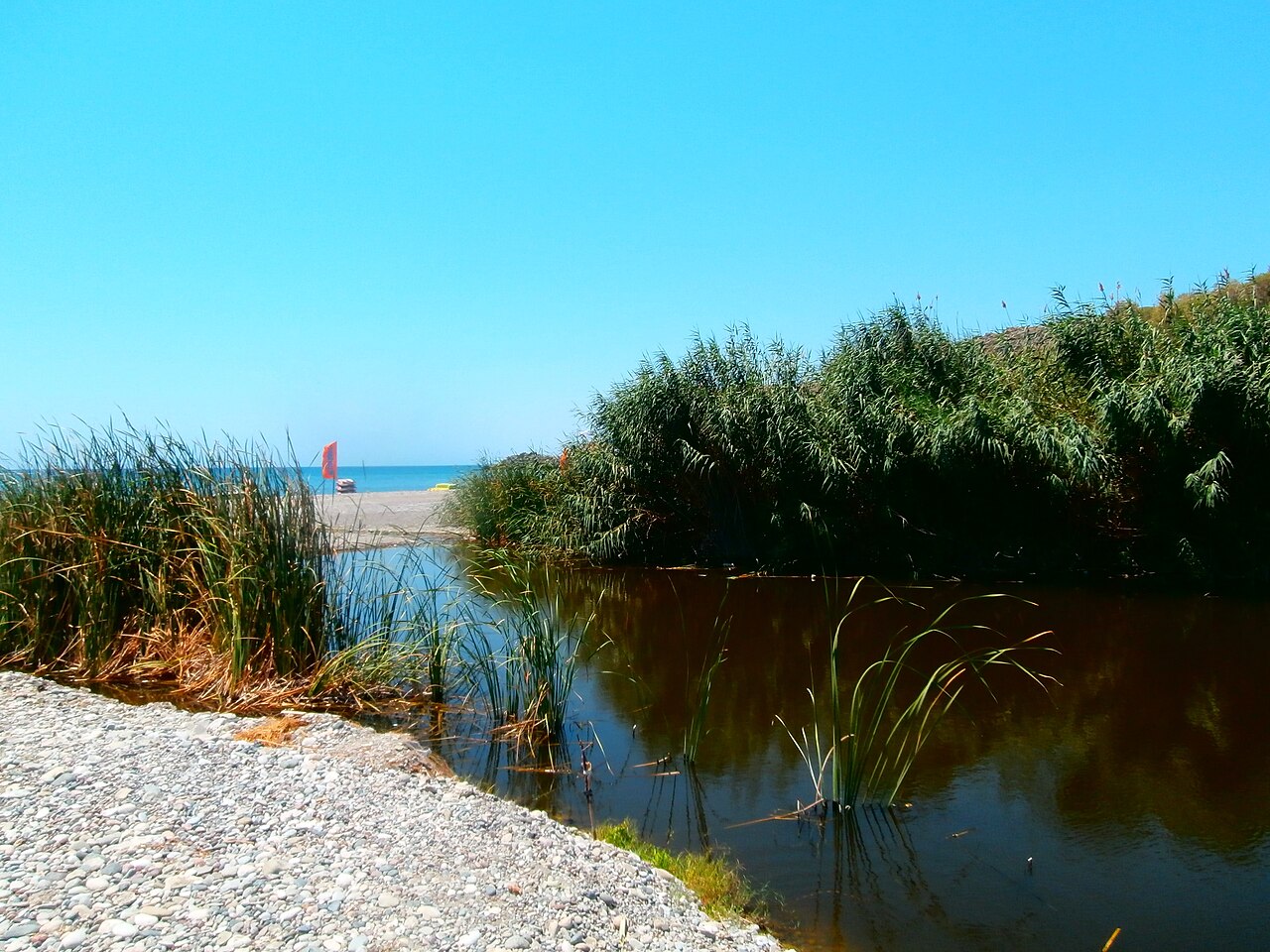

Rhodes after an extraordinary deluge
On 14 October 2026, intense rain and flash flooding struck Rhodes. Reporting from Kathimerini described a fatality near Stegna, vehicles carried into the sea, flooded roads, emergency rescues and a state of emergency. The National Observatory of Athens’ meteo.gr recorded exceptional rainfall across Greece; contemporaneous reporting put the Rhodes total at 264 millimetres, including about 202 millimetres in roughly six hours. Greece’s Ministry for Climate Crisis and Civil Protection warned that severe phenomena would continue in eastern and southern areas.
The human loss must come before symbolism. Floods have meteorological, hydrological, geographic and infrastructural causes. Feng Shui did not create the storm, cannot predict an individual tragedy, and is not a substitute for engineering, emergency alerts or climate science. The relationship explored here is philosophical: Feng Shui offers a language for thinking about how people inhabit flows of water, wind, movement and responsibility.
A disaster is natural and social at the same time
Rain falls, but vulnerability is distributed. The same volume of water produces different consequences depending on drainage, terrain, maintenance, building patterns, road design, warning systems, mobility and access to help. A tourist island adds seasonal pressures: roads, hotels, services and workers are concentrated around coastlines and transport corridors. When mobility stops, the effects spread through work, care, supply chains and public confidence.
Sociology therefore asks not only “How much rain fell?” but “Who was exposed, who could move, who received a warning, and who had resources to recover?” The individual driver, hotel worker, older resident, emergency responder and municipal engineer inhabit the same event differently. Calling a disaster simply “bad luck” can hide these unequal positions. Calling it solely an individual failure can be worse, because it transfers responsibility away from systems that shape risk.
Water in Feng Shui: relation rather than punishment
The name Feng Shui is commonly translated as “wind and water.” In many traditions, water is associated with movement, pathways, exchange and potential. That symbolism can illuminate the Rhodes event only if it remains metaphorical. The flood was not water “sending a message,” and affected people did not attract misfortune through the arrangement of a home or business.
A responsible reading instead asks how water is given room. Where does it normally travel? What happens when channels are blocked, soil is sealed or a road becomes an unintended river? These are practical planning questions before they are symbolic ones. Feng Shui’s relational imagination can encourage attention to thresholds, slopes and circulation, while specialists determine rainfall probabilities, watershed behaviour and construction standards.
Qi as circulation—and the limits of the metaphor
Qi can be understood here as a traditional vocabulary of vitality and circulation. In a home, people may use it to notice congested entrances or routines that no longer work. At the scale of an island, the analogy shifts toward networks: watercourses, roads, information, emergency services and social trust. A resilient system does not depend on one perfect object; it depends on flows that can continue or safely pause under stress.
Yet a metaphor is not a measurement. Qi cannot replace rainfall gauges, radar, hydraulic models or rescue protocols. The National Observatory’s figures matter because they quantify an exceptional event. Feng Shui contributes a question—“How are relationships and flows organised?”—not an empirical answer. Keeping that boundary clear prevents spiritual language from competing with evidence.
Yin and yang: calm, force and adaptive balance
Yin and yang describe interdependent qualities rather than a promise of permanent stillness. A landscape may alternate between dryness and intense water; a community between ordinary routines and emergency mobilisation. Balance is therefore dynamic. It requires the capacity to absorb change without allowing one force to destroy the conditions for life.
For Rhodes, a yin-yang reading can focus on preparedness: quiet maintenance before a storm supports rapid action during one. Clear warnings must be matched by trusted institutions; evacuation routes by places of refuge; tourism development by year-round infrastructure. The aim is not to suppress water absolutely but to create proportion, redundancy and safe release. This resonates with disaster-risk practice, though the evidence for particular measures comes from engineering and public policy, not from cosmology.
The five phases as a map of shared duties
The five phases can serve as an editorial framework. Water points to drainage, coastlines and information flows. Wood suggests land cover, roots, recovery and long-term growth. Fire evokes energy, urgency and the communication that activates a response. Earth concerns slopes, foundations and the stabilising work of care. Metal evokes standards, tools, maintenance and clear institutional roles.
No phase “caused” the flood. The value of the framework is that it distributes attention. Residents can learn safe behaviour and avoid crossing floodwater. Hotels and businesses can train staff and plan continuity. Municipalities can maintain drains and map hazards. Regional and national bodies can fund infrastructure, coordinate alerts and regulate construction. Researchers and journalists can make risks legible. Harmony becomes cooperative capacity, not a private decorating achievement.
Memory, warning and the ethics of place
Rhodes had already experienced damaging floods, and the municipality announced in September 2026 that ten autonomous water-level sensors were being installed at vulnerable points. That initiative shows an important sociological fact: resilience is built through memory translated into institutions. Sensors alone cannot remove risk, but they can support a chain from observation to warning and action.
Feng Shui traditionally values attentive placement. Applied cautiously to public life, placement asks whether homes, roads and essential services respect the behaviour of the landscape. Ethical placement also asks who bears the cost when development occupies vulnerable ground. People with fewer housing choices or precarious employment may accept risks that wealthier residents can avoid. A discussion of harmony that ignores power would be incomplete.
From the front door to the watershed
Popular Feng Shui advice often begins at the entrance. In a flood context, the idea of a threshold can expand beyond the door. The street, culvert, stream mouth, hillside and warning message are all thresholds between ordinary life and danger. Maintaining them is not solely a homeowner’s task. It requires coordinated stewardship across property boundaries.
This broader scale changes the moral of the story. A household may keep exits clear, store emergency supplies and follow alerts. It cannot independently redesign a watershed or guarantee mobile coverage. Personal preparedness matters, but it must sit inside public investment and accountable planning. Otherwise “be prepared” becomes a way to abandon people to risks they did not create.
What resilient harmony could mean
Resilient harmony is not the absence of disturbance. It is the capacity to notice danger early, protect life, learn from damage and rebuild without reproducing the same vulnerabilities. It includes modest household actions, but also drainage maintenance, updated hazard maps, enforceable land-use rules, accessible warnings, protection for workers and support for people who cannot evacuate easily.
Feng Shui can help articulate the aspiration: people and place should support one another. Sociology clarifies that this relationship is organised through institutions, markets and unequal resources. Climate and engineering sciences identify physical risks and test solutions. These perspectives should not be collapsed into one another. Their productive meeting lies in attention—attention to water, to evidence, to memory and to those most exposed.
Interpreting the event without blaming victims
After tragedy, spiritual explanations can offer meaning, but they can also imply that victims failed to create harmony. That is unacceptable. No furniture position, colour, mirror or ritual explains why a person was caught in floodwater. Compassion begins by refusing retrospective moral judgement.
A better Feng Shui interpretation is collective and forward-looking. It asks how to make safe movement easier, warnings clearer and places more responsive to their environment. It treats the October flood as a call to humility: human plans operate within powerful natural processes, and dignity depends on the social arrangements that prepare for them. The most important “cure” is not an object. It is sustained care expressed through knowledge, maintenance, solidarity and responsible public decisions.
Sources
- Kathimerini — Storm kills man on Rhodes, floods parts of Greece for second day (14 October 2026)
- National Observatory of Athens / meteo.gr — Heavy rainfall totals, 13–14 October 2026
- Greek Ministry for Climate Crisis and Civil Protection — Risk Assessment Committee update (14 October 2026)
- Municipality of Rhodes — autonomous flood sensors (3 September 2026)
- University of Illinois, Spurlock Museum — cultural context for Feng Shui (3 April 2026)
Let's discuss about this here….
What Is Feng Shui? — Explore the basics and ask questions in our forum.