 English
 Français
 Deutsch
 Italiano
 Español
 Português
On 7 October 2026, Ukraine faced one of the largest Russian aerial attacks of the war, with missiles and drones striking cities, infrastructure and, according to President Volodymyr Zelenskiy, the energy sector. The event is immediately geopolitical and humanitarian. It is also a stark case study in systems: how societies depend on circulation, redundancy, protected nodes and the ability to restore flow after disruption.
What happened
Reuters reported that Russia launched a large barrage of drones and missiles overnight, causing civilian deaths and damage to residential, industrial and infrastructure sites. A later Reuters update quoted Zelenskiy saying that 70 missiles plus drones were used and that energy infrastructure was a key target. The Associated Press likewise reported a major coordinated assault across Kyiv and numerous regions, highlighting the difficulty of intercepting ballistic missiles and newer drone systems.
This attack did not occur in isolation. On 21 September, the UN Independent International Commission of Inquiry on Ukraine warned that continued attacks on critical energy infrastructure were increasing civilian vulnerability as winter approached. A June UN Human Rights Office report documented hundreds of attacks on electricity generation, transmission, distribution and heating infrastructure during the previous winter, with consequences for homes, hospitals, schools, water and heating.
Why the energy grid matters beyond electricity
An electricity network is not simply a collection of power stations and cables. It is a circulation system connecting generation, transmission, distribution and consumption. When one layer fails, effects propagate into communications, transport, hospitals, water pumping, heating, commerce and public confidence. That is why attacks on energy systems can exert pressure far beyond the physical site that is hit.
Strategically, resilience therefore depends on more than defending individual facilities. It depends on redundancy, distributed capacity, repair speed, spare equipment, cross-border interconnection, storage, local generation and the ability to reroute supply. In systems language, resilience is the capacity to absorb a shock without losing the whole function.
Where Feng Shui enters the analysis
Feng Shui should not be used to romanticise war, predict military outcomes or imply that victims somehow attracted events through “bad energy.” That would be both ethically wrong and philosophically shallow. A more serious use of Feng Shui is as a framework for reading relationships between flow, form, exposure, protection, balance and adaptation.
Traditional Feng Shui asks how qi moves through an environment: where it gathers, where it accelerates too violently, where it stagnates, and where form protects or exposes the system. At the scale of a home, this might concern doors, corridors, roads, slopes, water and shelter. At the scale of national infrastructure, the analogy becomes structural rather than mystical: energy networks are literal flows, substations are nodes, transmission corridors are channels, and backup systems are alternative pathways.
Qi as circulation: the grid as a living network
In Feng Shui, healthy qi is neither frozen nor uncontrolled. It circulates. A power grid follows a surprisingly similar systems principle. Electricity must continuously move through a balanced network in which supply and demand remain synchronized. A severed line, overloaded transformer or isolated generation source changes the condition of the entire network.
This gives us the first Feng Shui interpretation: the strength of a system is not measured only by how much energy it possesses, but by how intelligently that energy can circulate. Concentrating enormous capacity in a small number of indispensable nodes may be efficient in peaceful conditions, yet creates vulnerability under attack. Distributed generation, microgrids and multiple interconnections resemble the Feng Shui preference for flow that has more than one viable route.
Sha Qi and violent, accelerated force
Classical Feng Shui often uses the idea of sha qi to describe harsh, attacking or excessively fast environmental influence: a straight road aimed at an entrance, an exposed edge, or a channel that drives force without moderation. We should treat this as a metaphor here, not a supernatural claim. Modern precision weapons represent directed, concentrated force aimed at critical points. Their strategic purpose is precisely to turn connectivity into vulnerability.
The Feng Shui response to harsh force is rarely “more force everywhere.” It is usually to soften, deflect, buffer, shield and redirect. In infrastructure terms, that translates into layered air defence, hardened facilities, dispersed assets, undergrounding where practical, physical barriers, rapid isolation of damaged sections and alternate routes for essential services.
The Five Elements: a model of dependencies
The Five Elements — Wood, Fire, Earth, Metal and Water — are best understood here as a vocabulary of relationships and transformation. Fire corresponds naturally to electricity, heat and high-energy systems. Metal evokes machinery, grids, engineering, control and defence. Water represents movement, adaptability and networks. Earth suggests stability, shelter, foundations and stored reserves. Wood represents growth, recovery, rebuilding and the capacity of a system to regenerate.
An energy crisis becomes dangerous when “Fire” dominates without adequate Earth and Water: high energy demand and destructive heat without sufficient storage, protection, flexibility and alternative circulation. Metal can control and structure Fire, but excessive dependence on hard technical control can itself become brittle. Wood is the rebuilding cycle: technicians, replacement equipment, new decentralized capacity and institutional learning.
Bagua: what areas of collective life are affected?
The Bagua is traditionally mapped onto spaces, but philosophically it can also help organize consequences. The Kan / Career and Path sector resonates with continuity and the ability to keep moving through uncertainty. Li / Recognition and Fire points to visibility, electricity, information and morale. Kun / Relationships highlights alliances and mutual support, including cross-border energy assistance. Gen / Knowledge reflects technical expertise and lessons learned. Qian / Helpful People evokes external support, logistics and international partnerships.
Seen this way, an attack on the grid is never only an attack on “Fire.” It pressures the entire Bagua: work, health, family stability, knowledge systems, relationships and collective direction. The lesson is holistic: protect the network by strengthening the relationships around it.
Yin and Yang: centralisation versus distribution
Large centralized plants embody a Yang quality: powerful, visible, productive and concentrated. Smaller distributed sources, batteries, local heat systems and microgrids can be read as more Yin: dispersed, quieter, less visible and locally adaptive. Neither is inherently superior. Feng Shui emphasizes dynamic balance. A resilient modern grid needs both: the efficiency of large systems and the survivability of distributed ones.
This is a useful policy insight. Resilience does not require abandoning central infrastructure. It requires preventing central infrastructure from becoming a single point of systemic failure. The same principle applies to data centers, water networks, supply chains and even household preparedness.
The “Ming Tang” principle: preserve usable space around critical nodes
In traditional site selection, the ming tang or “bright hall” is an open, receptive space where qi can collect before entering a site. In modern infrastructure language, we can interpret this as operational breathing room: physical separation, access for repair crews, spare capacity, inventory, emergency routes and clear decision authority. Systems fail faster when every component is operating at maximum load with no margin.
Margin is not waste. In resilience engineering, spare capacity is what allows a network to survive exceptional conditions. Feng Shui reaches a comparable insight through a different vocabulary: good flow requires space to gather, turn and redistribute.
What this event teaches through a Feng Shui lens
The deepest lesson is that resilience is relational. A grid survives not because every component is invulnerable, but because damage can be isolated, flow can be redirected, resources can arrive from elsewhere, and people know how to respond. Feng Shui likewise focuses less on isolated objects than on relationships among forms, directions, movement and use.
For governments and infrastructure operators, the practical translation is clear: diversify, decentralize where sensible, protect key nodes, maintain reserves, design alternative pathways and strengthen alliances. For communities and households, the same philosophy scales down: avoid dependence on one source, understand essential needs, maintain reasonable backup options, and organize spaces so emergency movement is simple rather than obstructed.
A necessary ethical boundary
Feng Shui can offer a language for understanding resilience, but it cannot explain the moral responsibility for an attack. Decisions are made by people and institutions; weapons cause physical destruction; international law and evidence are the proper frameworks for assigning responsibility. Feng Shui belongs here as interpretive philosophy — a way to think about vulnerability, balance and recovery — not as a substitute for factual reporting or geopolitical analysis.
Conclusion: from fragile efficiency to resilient flow
The 7 October attack shows how modern conflict targets networks as much as territory. Energy infrastructure sits at the intersection of military strategy, civilian life, economics and psychology. Through a Feng Shui lens, the core issue is flow under pressure: whether vital energy has alternative paths, whether exposed nodes have protection, whether the system contains enough Yin flexibility to balance Yang concentration, and whether recovery can begin quickly after disruption.
The philosophical message is not that harmony prevents conflict. It is that systems designed with balance, redundancy, shelter and adaptable circulation are better able to endure disruption. In both Feng Shui and modern resilience engineering, the objective is not perfect stillness. It is the capacity to remain functional while conditions change.
Sources
- Reuters, 7 Oct 2026 — Russia kills 11 in one of its biggest strikes on Ukraine, Zelenskiy says
- Associated Press, 7 Oct 2026 — Russian strikes on Ukrainian cities
- United Nations in Ukraine, 21 Sep 2026 — Human impact of systematic targeting of energy infrastructure
- UN Human Rights Office, 29 Jun 2026 — Systematic strikes on energy facilities
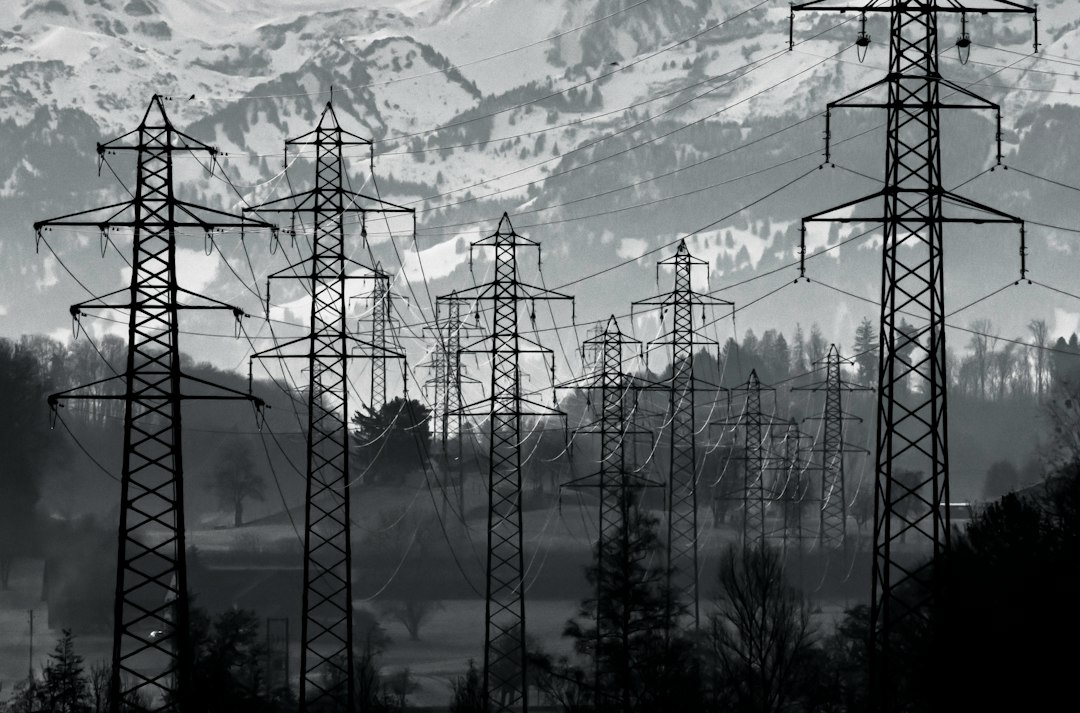
Image: Jan Huber / Unsplash, used under the Unsplash License.
Let’s discuss about this here…
What Is Feng Shui? — Explore the basics and ask questions in our forum.