 English
 Français
 Deutsch
 Italiano
 Español
 Português
10 October 2026 • World affairs and philosophical analysis

The event: peace through international law
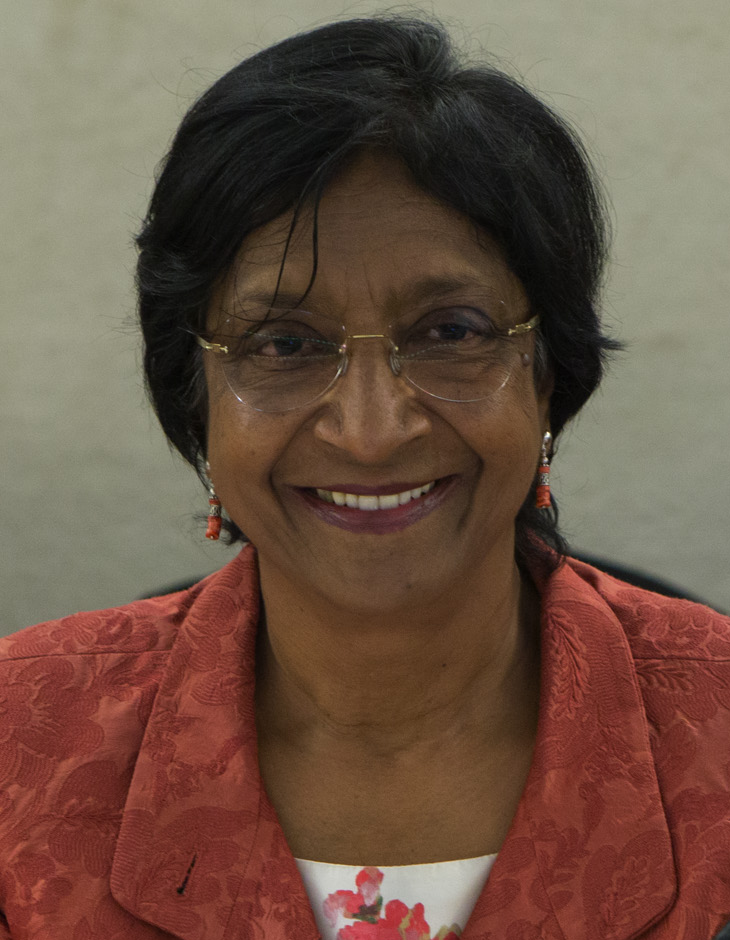
On 9 October, the Norwegian Nobel Committee named Navi Pillay the 2026 Peace Prize laureate for her work promoting peace and international law. [1] UN News recalls her opposition to apartheid and her service in international justice. [2] Reuters reports that US sanctions targeted the ICC that same day. [3]
The juxtaposition invites a difficult question: can a society call itself peaceful if the institutions intended to restrain power cannot operate reliably? A prize provides recognition; it does not enforce judgments, resolve disputes, or guarantee impartial institutions. Its wider significance lies in the conversation it opens about the conditions under which people can live without arbitrary domination. The following analysis is Chibagua’s philosophical interpretation of that question.
Why relate this event to Feng Shui?
Feng Shui concerns the relationship between people, their surroundings, and patterns of movement and settlement. Different schools interpret those relationships differently. Extending its vocabulary to international politics is a modern analogy, not a traditional geopolitical forecasting method. There is no evidence here that a compass direction, planetary cycle, or arrangement of objects caused the Nobel decision. Nor do the sources claim that Pillay follows Feng Shui.
The connection is nonetheless meaningful as a way of asking how an environment supports life. A comfortable chair cannot make an unsafe room safe; an impressive institution cannot create peace if people cannot access protection. Both examples distinguish attractive appearances from conditions that actually sustain those who inhabit a system. At this level, Feng Shui offers questions about relationships, boundaries, nourishment, and disproportionate forces.
Qi: what can circulate, and who is excluded?
Qi belongs to the traditional conceptual language of Feng Shui. It should not be equated with a scientifically measured political force. In this article, circulation becomes a metaphor for information, testimony, assistance, and trust. Ask whether these can reach the people who need them, or whether fear, bureaucracy, intimidation, and unequal resources obstruct their passage.
A witness who cannot speak safely resembles a blocked channel in this analogy. A complaint procedure that exists only on paper resembles an entrance nobody can use. The practical response is not to buy an ornament but to examine access: translation, transparent procedures, protection against retaliation, and opportunities to be heard. The important measure is whether people can participate meaningfully, not whether an organisation’s language sounds harmonious.
Yin and Yang: restraint is part of strength
Yin and Yang describe complementary tendencies, not two teams with permanent moral identities. Here, visibility, decisive action, and confrontation are Yang-like; listening, deliberation, recovery, and restraint are Yin-like. Neither is sufficient alone. Pure confrontation can exhaust the capacity for dialogue, while listening without action can leave suffering unchanged.
Pillay’s recognition invites reflection on a productive combination: resolve enough to pursue accountability and patience enough to assess evidence. Balance does not mean splitting the difference between a documented harm and its denial. It means choosing responses that are firm without becoming arbitrary, and careful without becoming paralysed. The aim is a system capable of both protecting people now and preserving fair procedures over time.
The Five Phases: a framework for questions
Wood, Fire, Earth, Metal, and Water are better understood here as symbolic phases of activity than as literal substances governing nations. The associations below are an editorial mapping, not a diagnosis endorsed by the Nobel Committee. They help examine several needs together instead of assuming that one institution or one personality can deliver peace.
Wood: growth needs room and direction
Wood represents development and renewal in this reading. Applied to peace, it asks whether education, legal knowledge, and civic participation can grow. If the next generation learns that institutions never listen, distrust may be reproduced even after a conflict subsides. Renewal therefore includes learning how to debate, document experiences, and engage with public processes.
Growth also needs limits. An organisation can expand its ambitions faster than its ability to deliver. The useful question is whether new promises are matched by trained people, resources, and accessible procedures. Healthy Wood is not endless expansion; it is development that strengthens the whole environment.
Fire: recognition illuminates, outrage can overwhelm
Fire represents visibility and intensity. A Nobel announcement concentrates attention and can bring previously neglected concerns into public discussion. That attention is valuable when it clarifies responsibilities and encourages informed engagement. It becomes less useful when every disagreement is amplified into a spectacle.
To moderate this symbolic Fire, readers can separate announcements from outcomes and emotional reactions from evidence. Public recognition should illuminate the work of justice rather than replace it. A celebrated moment needs quieter follow-through: sustained reporting, careful scrutiny, and attention after the headlines move on.
Earth: peace must have a habitable foundation
Earth suggests support, steadiness, and the conditions of everyday life. A political order that appears orderly from a distance may still leave people without safe housing, dependable services, or a place to recover. This interpretation asks whether institutional success is experienced in ordinary lives.
Earth also directs attention toward those least able to absorb disruption. The metaphor must never blame harmed people for an alleged energetic imbalance. Responsibility belongs to actions and structures that can be investigated. A humane foundation means practical support, dignity, and repair, not a demand that suffering people become more spiritually balanced.
Metal: boundaries make trust possible
Metal represents definition, standards, and disciplined judgment. Courts and legal procedures fit this metaphor because they seek to distinguish allegations, evidence, and conclusions. Boundaries can prevent the strongest actor from deciding every question by force. Yet a rigid procedure can also become inaccessible or insensitive to context.
The balance to seek is consistent standards with intelligible access. The same expectations should not disappear when they become inconvenient to a powerful participant. Conversely, invoking justice should not eliminate scrutiny of an institution’s own conduct. Credibility depends on accountability within the system as well as accountability demanded from others.
Water: dialogue needs channels, not surrender
Water suggests adaptability, listening, and connections across obstacles. In diplomacy and community debate, that means finding ways for information to travel without insisting that every participant already agrees. Adaptability can change the route toward a goal while preserving the goal of protecting people.
Water without boundaries can become directionless; boundaries without channels can trap everyone in confrontation. Dialogue therefore needs a purpose, a process, and the possibility of revising positions in response to evidence. A pause in argument is helpful only if it opens space for understanding or action rather than concealing unresolved harm.
Generation and control: support needs counterweights
The familiar generating sequence is Wood–Fire–Earth–Metal–Water–Wood. A political analogy might move from civic learning to public attention, from attention to practical support, from support to durable procedures, and from procedures to renewed communication. This is a reflective story, not an equation or a prediction.
The controlling relationships—Wood restrains Earth, Earth restrains Water, Water restrains Fire, Fire restrains Metal, and Metal restrains Wood—add another lesson: excessive tendencies need counterweights. Listening can cool public outrage; defined procedures can limit unrealistic expansion. These comparisons are selective. They do not establish that any particular sanction, court decision, or diplomatic strategy is correct.
The Bagua: a map of questions, not a map of countries
The Bagua’s eight trigrams can organise reflection on interdependence, but schools differ in how they apply them. Contemporary life-area interpretations are not identical to classical compass methods. It would be misleading to assign a nation a moral status because of its direction on a world map, or to forecast peace from an absent floor plan.
For this discussion, use a broad checklist: learning, relationships, livelihood, public reputation, helpful networks, creativity, continuity, and material resources. Where does recognition advance these needs, and where does it leave gaps? The purpose is to notice neglected aspects of human flourishing, not to turn a symbolic grid into a diplomatic measurement tool.
What readers can do in their own spaces
Begin with the place where you read and discuss the news. Keep a clear surface for notes, reduce distracting notifications, and make sources easy to retrieve. Arrange a conversation so participants can hear one another and leave comfortably. Lighting, accessibility, seating, and an uncluttered route matter because they affect the real experience of a space.
Then adopt a simple discussion practice: identify the claim, check its source and date, distinguish fact from interpretation, and state what evidence could change your view. These actions are compatible with a Feng Shui concern for supportive surroundings, but they work through ordinary attention and organisation. They do not constitute a ritual that changes international events.
How to judge whether balance is improving
Look beyond the symbolism of the prize. Useful questions include whether people can access remedies, whether evidence is assessed transparently, whether institutions can be scrutinised without intimidation, and whether support reaches affected communities. These are questions for reporting and observation; this article does not assert that the award has already improved those conditions.
The deepest connection to Feng Shui is the relationship between an environment and those who live within it. Peace becomes more credible when structures allow dignity, fair limits, renewal, and communication to coexist. Pillay’s Nobel provides an occasion to ask about that architecture. The answer must ultimately be found in human conduct and institutions, not in the placement of a symbolic cure.
Sources and image
- Norwegian Nobel Committee: 2026 laureate announcement — 9 October 2026.
- UN News / Africa Renewal: Pillay awarded the Peace Prize — 9 October 2026.
- Reuters: Pillay wins the 2026 Peace Prize — 9 October 2026.
Sources checked on 10 October 2026. The Feng Shui interpretation is original editorial analysis; the news sources do not validate its symbolic mappings. Image provenance and public-domain status are linked in the caption.
Let’s discuss about this here….
What Is Feng Shui? — Explore the basics and ask questions in our forum.