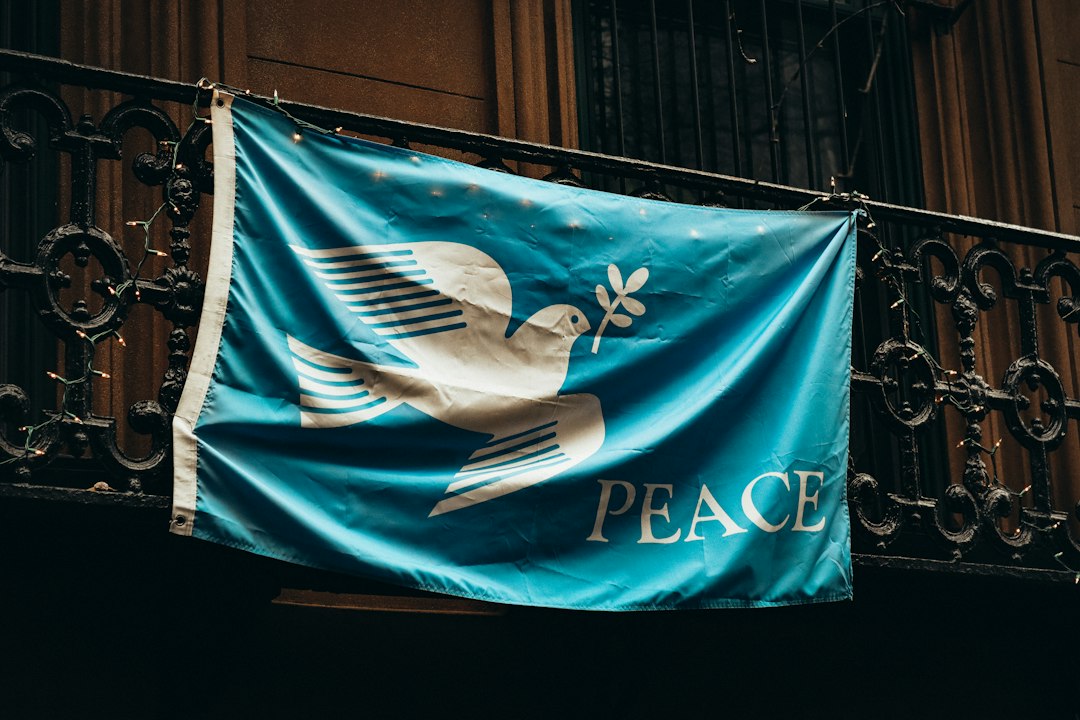
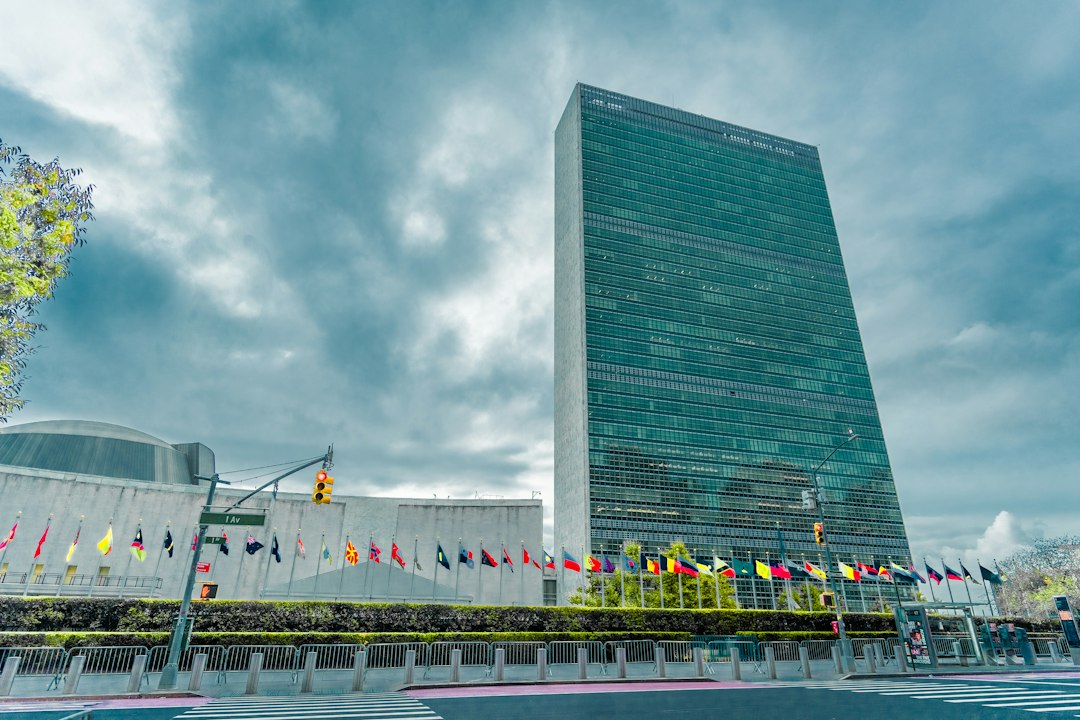
September 26 was the UN International Day for the Total Elimination of Nuclear Weapons. The United Nations says the observance raises awareness of the threat posed by nuclear weapons and the need for their elimination. Because September 26 fell on a Saturday in 2026, the General Assembly scheduled its high-level plenary meeting for September 29. ITUC–Asia Pacific issued a separate public statement calling for abolition and cooperative security; SIPRI’s 2026 data provides broader context on existing arsenals.
Why it matters
Nuclear policy combines catastrophic humanitarian risk, national security claims, treaties, verification and political trust. An observance is not disarmament itself, but it creates a public moment to examine measurable commitments and obstacles.
Feng Shui philosophical interpretation
Used cautiously, Yin–Yang highlights a tension: deterrence is presented as protection, yet the same weapons create profound vulnerability. The concept of Qi as shared flow can symbolize interdependence—radiation, climate effects, fear and economic costs do not respect borders. In the Bagua metaphor, security cannot be isolated from health, community, knowledge and relationships.
This lens does not calculate risk, prove causation or replace arms-control expertise. It simply asks whether a security arrangement that produces extreme shared danger is genuinely balanced, and how verified, reciprocal steps might change that pattern.
Feng Shui is presented as a philosophical and cultural interpretive lens, not scientific causation, prediction, or medical, legal, financial, architectural, military or safety advice.
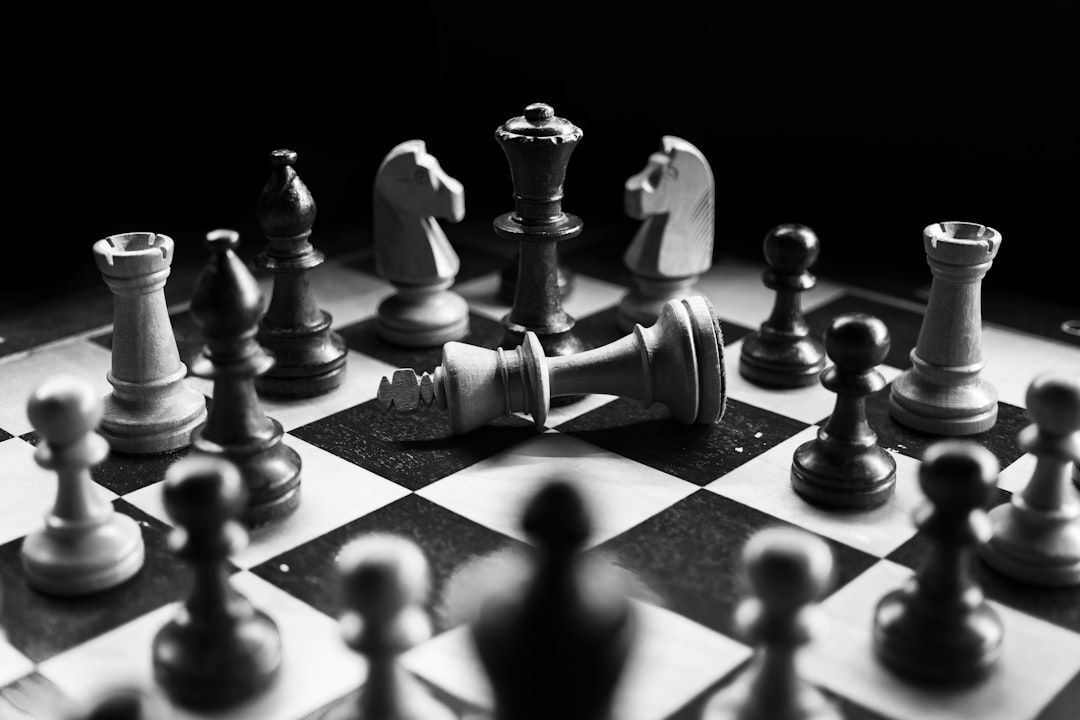
On 26 September 2026, the FIDE General Assembly in Samarkand elected Timur Turlov president of the International Chess Federation. FIDE announced the result, and Chess.com reported a 110–85 second-round victory over Wadim Rosenstein. Reuters had earlier described the election’s governance context, including compliance with international sports rulings, anti-cheating, digital development and support for smaller federations.
Why it matters
FIDE sets rules and coordinates a global game played across political and cultural boundaries. Leadership affects integrity systems, tournament access, federation resources and the organization’s credibility. An election supplies a mandate; it does not prove that promises will be delivered.
Feng Shui philosophical interpretation
Feng Shui treats timing and position as relational rather than isolated. A leadership transition can be read as a change in the center of a Bagua: every sector—players, organizers, arbiters and federations—feels the effects. The Five Elements suggest that stable change needs more than forceful Wood-like growth; it also needs Metal-like rules, Water-like communication, Earth-like continuity and Fire-like visibility.
This metaphor encourages evaluation of balance: renewal without institutional amnesia, continuity without stagnation, and ambition with accountability. It does not predict Turlov’s performance or endorse any candidate.
Feng Shui is presented as a philosophical and cultural interpretive lens, not scientific causation, prediction, or medical, legal, financial, architectural, military or safety advice.
On 26 September 2026, German Foreign Minister Johann Wadephul and Russian Foreign Minister Sergei Lavrov met on the sidelines of the UN General Assembly in New York. Reuters and Deutsche Welle described it as the first meeting between the two countries’ top diplomats since before Russia’s full-scale invasion of Ukraine in 2022. Reuters reported that the discussion covered bilateral relations and the war, and that Wadephul informed European allies afterward.
Why it matters
A direct channel can reduce misunderstanding and carry limited proposals, but a meeting is not an agreement. It does not change verified facts about the war, remove legal or political responsibility, or guarantee progress. Its importance lies in the reopening of contact at a moment of severe tension.
Feng Shui philosophical interpretation
Feng Shui studies relationships among place, movement and boundaries. Used metaphorically, diplomacy resembles a passage whose Qi has become blocked. Reopening that passage may allow information to move, while sound boundaries prevent movement from being mistaken for acceptance. Yin and Yang also warn against a false binary: silence and engagement are not the only choices, and dialogue can coexist with firm disagreement.
The useful question is not whether a meeting is “harmonious,” but whether the channel improves clarity, reduces avoidable danger and preserves accountability. This is a cultural and philosophical interpretation, not a causal claim or prediction.
Feng Shui is presented as a philosophical and cultural interpretive lens, not scientific causation, prediction, or medical, legal, financial, architectural, military or safety advice.
The United States and Iran have resumed indirect diplomatic contact after months of limited negotiations. The discussions took place around the United Nations General Assembly in New York, with Qatari mediators carrying messages between the two sides.
The talks created a possible opening in a conflict whose effects extend far beyond the two countries. However, officials cautioned that significant disagreements remain. Contact should therefore not be confused with either a ceasefire or a peace agreement.
What was confirmed
Reuters reported on 23 September that the United States and Iran remained far apart over how to end their conflict. A senior Iranian official nevertheless said that diplomacy needed to continue.
The negotiations involved mediators moving between the delegations rather than confirmed direct talks. US representatives described the discussions positively, while Iran emphasized that its principal conditions had not been abandoned.
Iranian President Masoud Pezeshkian reinforced this mixed message in his address to the UN General Assembly. He criticized US pressure but also signalled that Iran remained prepared for dialogue conducted without threats.
The principal disagreements
Iran has connected a potential reopening of the Strait of Hormuz with several demands, including reduced US military pressure, an end to the blockade of Iranian ports and relief from economic restrictions.
The United States has maintained its own security and nuclear demands. Public statements from the two governments therefore reveal continued disagreement over both the conditions for ending hostilities and the order in which concessions should occur.
These positions are statements made by the respective parties. They should not be presented as independently established facts or as evidence that an agreement is imminent.
Why the Strait of Hormuz matters globally
The Strait of Hormuz is a narrow maritime passage connecting the Persian Gulf with the Gulf of Oman and international shipping routes. Disruption there can affect energy transportation, insurance, commercial shipping and prices across multiple regions.
That interconnectedness helps explain why even limited diplomatic contact attracted international attention. The consequences of confrontation do not remain confined to military forces or national borders. They can reach workers, businesses and households through transportation delays and higher energy costs.
Diplomatic progress could reduce those pressures, but a single meeting cannot establish a durable change. The significance of the talks lies in the reopening of communication—not in a result that has yet to be achieved.
A Feng Shui reflection on interrupted flow
Feng Shui can offer a philosophical lens for considering this moment, although it cannot explain a war or determine diplomatic outcomes.
Chi is often associated with movement and flow. Used strictly as a cultural metaphor, it invites us to consider what happens when essential channels become obstructed. The Strait of Hormuz is a physical passage, while diplomacy is a channel of communication. When either closes, pressure accumulates and consequences can spread outward.
Restoring flow does not mean removing every boundary or accepting every demand. Healthy movement also depends on structure, clarity and mutual recognition of limits. In diplomacy, that can mean keeping communication open while acknowledging that serious disagreements remain unresolved.
Contact is not yet balance
The relationship between Yin and Yang is sometimes described too simply as harmony. It is more accurately a dynamic relationship between different forces. Applied philosophically here, it reminds us that dialogue and confrontation can exist at the same time.
That does not make the positions or actions of the parties morally equivalent. Nor does it turn pressure, suffering or military action into decorative symbolism. It simply encourages careful attention to the difference between movement and resolution.
The renewed talks represent movement. Whether they eventually produce balance, de-escalation or a lasting settlement remains unknown.
The Feng Shui discussion in this article is a philosophical interpretation only. It is not scientific, medical, legal, financial, architectural, military or safety advice.
On 20 September 2026, Ukraine carried out a large-scale attack using drones against Moscow and its surrounding region. A facility at the Moscow oil refinery was damaged, and authorities reported deaths and evacuations after strikes also affected residential areas. The attack took place on the final day of Russia’s parliamentary election.
The scale of the attack needs careful attribution. Moscow’s mayor said Russian forces intercepted more than 1,600 drones, including 450 aimed at Moscow. These are Russian official figures, not independently established totals, and news reports differ on casualties. Ukrainian President Volodymyr Zelenskyy described strikes on oil infrastructure. Moscow’s mayor accused Ukraine of trying to disrupt the election; that is an assessment of intent rather than a fact that timing alone can prove.
The wider human context also matters. On the same day, Russian drone attacks in Ukraine killed civilians in the Kyiv region, according to Ukrainian authorities. Every reported death concerns a person and a community. None should be reduced to a symbol in an argument about the war.
A philosophical Feng Shui reflection
Feng Shui offers a way to reflect on disruption, although it cannot explain military events. Yin and Yang describe a relationship between different forces, and the idea of balance invites us to notice how change in one place can affect life elsewhere. Here, damage to energy infrastructure, danger in residential areas and political claims all enter the same public conversation.
Balance does not mean treating every action or claim as equivalent. It means keeping distinctions clear: what journalists observed, what officials stated, what remains uncertain and what readers themselves infer. It also means allowing civilian experience to remain visible when attention turns to weapons, infrastructure or political strategy.
The concept of Chi can be understood here as a cultural and philosophical metaphor for flow. When transport, communication or energy systems are disrupted, the effects spread beyond the original point of impact. This perspective does not assign mystical causes to war. Instead, it encourages attention to interdependence and to the fragile systems that support everyday life.
Attention before interpretation
The events of 20 September show how quickly war can unsettle places far from a front line. A thoughtful response begins with accurate reporting, careful attribution and respect for the people affected. Any philosophical meaning drawn afterward should remain modest beside those realities.
The Feng Shui connection in this article is a philosophical interpretation. It is not scientific, medical, legal, financial, architectural, military or safety advice.
On 22 June 2026, Reuters reported that two crude tankers carrying just under two million barrels of oil sailed through the Strait of Hormuz. Two additional supertankers entered the Gulf. Traffic remained only a fraction of the roughly 125 daily vessel crossings recorded before the Iran war began on 28 February.
Illustrative cargo ship on Lake Maracaibo, Venezuela; not the Strait of Hormuz · Wilfredor · CC0 · Wikimedia Commons
A separate Reuters report said four India-bound cargo ships carrying urea, diammonium phosphate and sulphur had crossed the strait and were heading to Indian ports. India had previously said 16 fertilizer vessels carrying about 700,000 tonnes were stranded. These confirmed movements did not mean that the wider crisis had ended.
Why it matters
The strait is a narrow connection between producers, ports and consumers. Even a small restoration of movement can affect expectations about energy, food production and prices. The significance of the day was therefore not a declaration of peace, but a cautious reopening of circulation through a globally important bottleneck.
A philosophical Feng Shui reading
In a philosophical Feng Shui interpretation, the strait can be viewed as a gateway through which Chi must pass. Water represents movement, communication and adaptability, while the surrounding conflict evokes excess Fire: pressure, speed and confrontation. The returning ships suggest neither harmony nor victory. They illustrate how balance sometimes begins with a limited, observable restoration of flow. Bagua thinking also invites attention to interdependence: a constrained passage in one place can influence farms, markets and households far away.
21 June 2026 — U.S. and Iranian delegations met at Bürgenstock, Switzerland, for the first talks under an interim peace arrangement. The meeting unfolded under intense pressure: Iran said it had again closed the Strait of Hormuz amid continuing violence in Lebanon, while U.S. President Donald Trump threatened renewed attacks. Reuters reported that Vice President JD Vance said progress had nevertheless been made.
Conversation symbol · Benjamin D. Esham · Public domain · Wikimedia Commons
Why this mattered worldwide
The Strait of Hormuz is a narrow passage with consequences far beyond the region. Disruption there can affect energy supplies, shipping costs, inflation and household budgets across continents. The Swiss talks therefore concerned more than relations between Washington and Tehran: they tested whether diplomacy could contain a conflict whose economic and humanitarian effects were already international.
The signals were contradictory. Negotiators sat together while threats continued in public. Shipping data cited by Reuters indicated an immediate reduction in traffic after Iran’s announcement, yet the parties also discussed keeping the waterway open and enforcing ceasefire commitments. This mixture of dialogue and coercion made the day important—and fragile.
A Feng Shui reading: flow under pressure
In Feng Shui, healthy chi depends on movement that is neither violently accelerated nor completely blocked. A strait is an especially clear image of this principle: many flows—ships, energy, trade and political influence—must pass through a confined space. When that passage becomes a point of confrontation, pressure accumulates throughout the wider system.
The Bagua offers another useful metaphor. The Kan area is associated with Water, depth, risk and the path through uncertainty. Water can connect distant places, but it also reveals obstacles. The events of 21 June suggest that durable balance cannot be created only by controlling the passage. It requires attention to the connected conflicts, fears and unmet commitments feeding pressure into it.
From this perspective, the talks themselves resembled the deliberate creation of an opening: a place where opposing forces could slow down, exchange information and prevent misunderstanding from becoming escalation. Feng Shui does not predict political outcomes. It does, however, invite a practical question: does an arrangement restore circulation throughout the system, or merely move the blockage somewhere less visible?
What to watch next
Whether maritime traffic through the Strait of Hormuz normalizes.
Whether ceasefire commitments reduce violence in Lebanon.
Whether technical negotiations produce verifiable steps on nuclear issues, sanctions and regional security.
Whether public threats give way to stable channels of communication.
Editorial note: The event summary above is based on cited reporting. The Feng Shui reading is philosophical rather than scientific, medical, legal, financial, architectural or safety advice.
20 June 2026 — World Refugee Day placed one of the defining global realities of our time in public view: millions of people living away from home because safety, conflict or persecution left them no viable alternative.
Shelter symbol · OCHA Visual Information Unit · CC0 · Wikimedia Commons
Verified facts
World Refugee Day is observed each year on 20 June under the leadership of UNHCR, the UN Refugee Agency. It honors refugees’ courage and draws attention to protection, inclusion and durable solutions.
UNHCR’s Global Trends 2025 figures, presented on 11 June 2026, estimated that 117.8 million people were forcibly displaced worldwide at the end of 2025. The agency counted 41.6 million refugees, including people under UNHCR’s mandate and Palestinian refugees under UNRWA’s mandate. These figures describe different legal and humanitarian categories; they should not be collapsed into a single story or used to erase individual lives.
The global significance of 20 June lies less in a ceremony than in the scale of the systems it asks societies to examine: borders, asylum procedures, housing, schools, health care, employment, humanitarian finance and the conditions for safe return or long-term belonging.
Why this mattered globally
Forced displacement links local conflicts and persecution to international law, public budgets, neighboring states and communities of arrival. Most displaced people remain within their own countries or close to the countries they left. Responses therefore depend on cooperation, predictable funding and policies that protect dignity while helping host communities remain resilient.
An interpretive Feng Shui perspective
The following is a philosophical interpretation, not a verified claim about the event.
In Feng Shui language, Chi is often understood through movement and the conditions that allow life to circulate without becoming trapped or violently scattered. Displacement is not an aesthetic metaphor for that movement. It is a lived rupture. A respectful reading begins by recognizing the difference.
The Bagua can nevertheless offer a vocabulary for reflection. The area associated with helpful people and journeys may suggest that movement is never only about departure; it also depends on reception, routes, institutions and people willing to make arrival possible. Water can evoke passage and uncertainty, while Earth can evoke stability, shelter and the patient work of rebuilding. Yin and Yang remind us that protection needs both receptive space and active structures: welcome without services is fragile, while administration without humanity becomes cold.
Seen this way, balance is not stillness. It is the capacity of a place and its institutions to absorb change without pushing the most vulnerable to the margins. The practical question is not how to decorate suffering with symbolism, but how homes, neighborhoods and public systems can support safety, agency and belonging.
A grounded reflection
World Refugee Day asks societies to look beyond anonymous totals. Good spatial and social design can reduce confusion, improve access and create a sense of orientation—but rights, resources and accountable public policy remain essential. Human dignity is the starting point.