 English
 Français
 Deutsch
 Italiano
 Español
 Português
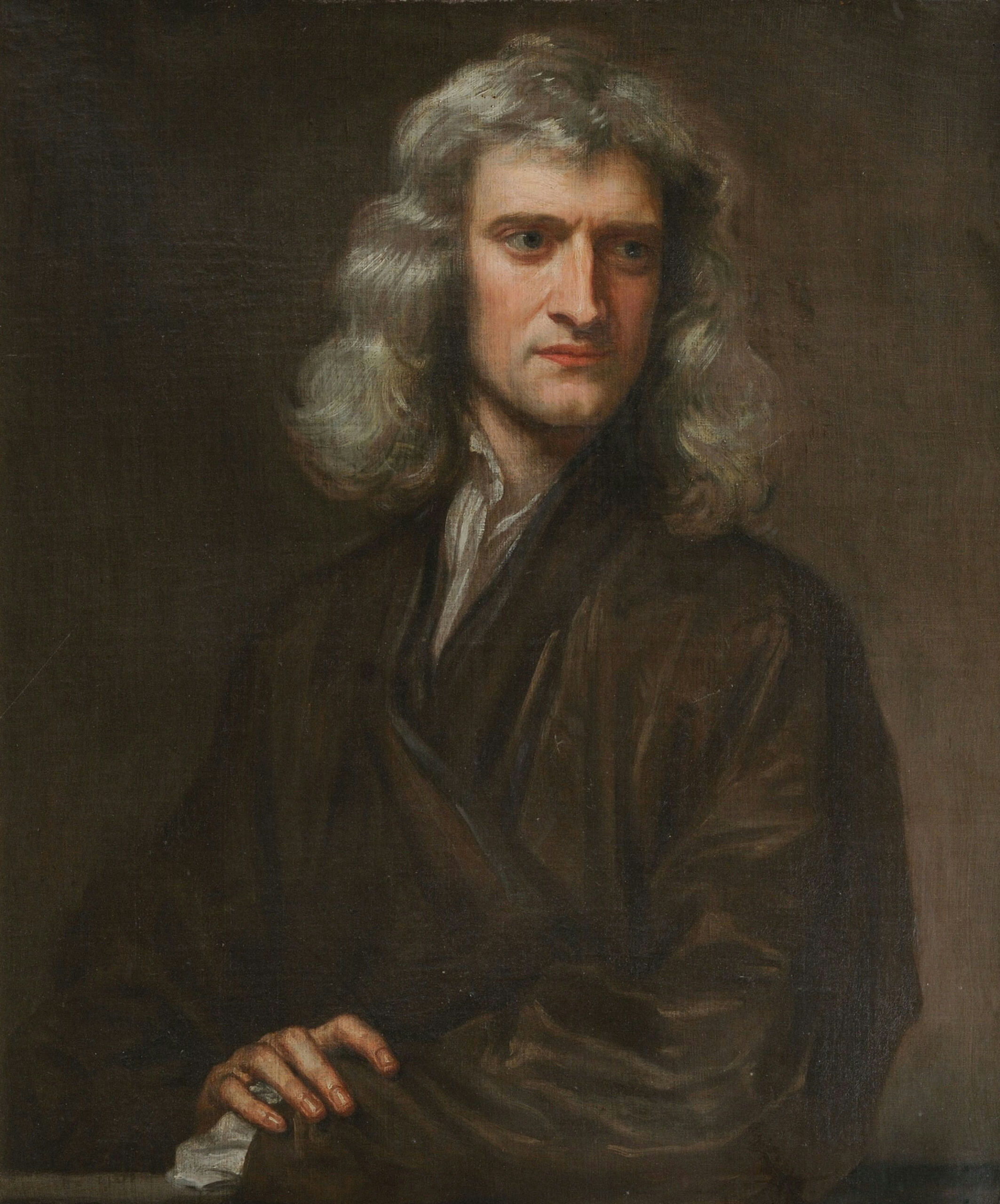

The 1936 auction: a turning point in the history of science
On 13 and 14 July 1936, Sotheby’s in London sold manuscripts that transformed the public understanding of Isaac Newton. The author of the Principia, whose mathematical account of motion and gravitation had shaped science internationally, emerged from these papers as a sustained investigator of alchemy and an unconventional reader of Scripture. This was a historical revelation about the Scientific Revolution rather than the discovery of a new physical law. Its importance lay in exposing how selective preservation and publication had shaped the familiar image of scientific genius. [1]
The documents belonged to the Portsmouth collection, inherited through Newton’s family connections. Viscount Lymington offered the remaining papers for sale after an earlier selection had placed scientific material at Cambridge. Cataloguing brought neglected manuscripts into view, while the auction dispersed them among buyers. A commercial transaction therefore created two opposite consequences: greater awareness of the archive and greater difficulty reconstructing it. Researchers subsequently needed to follow individual manuscripts across institutions, dealers and private collections rather than consult one intact body of evidence. [1]
The economist John Maynard Keynes became a central collector. Alerted late, he acquired manuscripts at the sale and then pursued additional material through dealers and exchanges. His growing collection concentrated on alchemy. Other buyers, notably Abraham Shalom Yahuda, developed collections with different emphases, including theology. The surviving archive consequently reflects both Newton’s original activities and later collectors’ priorities. Keynes’s influential description of Newton as a late representative of magical thinking challenged the reassuring portrait of an entirely modern rationalist. That description remains an interpretation, not a neutral classification. [1, 2]
What did the alchemical papers contain? They included reading notes, recipes, experimental records and attempts to understand the transformation of matter. The early modern category often called chymistry encompassed practices that later separated into chemistry, medicine and metal transmutation. Secretive language and symbolic names could coexist with practical operations involving furnaces, substances and repeated observation. Indiana University’s Chymistry of Isaac Newton project stresses this historical context. Treating every page as either modern chemistry or irrational superstition imposes distinctions that Newton’s working world did not consistently share. [3]
This does not mean that alchemical ambitions were scientifically established. Manuscripts reveal what their author investigated, copied or considered; they do not prove that transmutation recipes worked. Nor can similarities of vocabulary demonstrate that alchemy directly caused a particular mathematical discovery. Historians distinguish a text’s provenance, Newton’s contribution, the date of composition and its relationship to other work. Modern digital editions help by placing transcriptions beside manuscript images, allowing readers to inspect corrections and compare interpretations instead of relying only on celebrated quotations. [3]
The auction’s wider significance is therefore methodological and cultural. A globally influential scientific figure became more complex when excluded evidence returned to view. Newton could pursue mathematical demonstration, laboratory experimentation and religious interpretation without experiencing them as the tidy separate domains familiar today. The lesson is neither to dismiss science nor to romanticise secrecy. It is to examine how knowledge is produced, inherited and narrated. The 1936 sale remains a useful reminder that historical understanding changes when the archive changes, and that intellectual curiosity requires critical judgement as well as openness.
A Feng Shui interpretation: relationships, transformation and place
A Feng Shui reading of this episode must begin with a boundary: the sources cited here do not establish that Newton practised Feng Shui, or that Chinese geomancy influenced the 1936 auction. The connection offered here is a contemporary philosophical comparison. European alchemy and Chinese traditions have distinct histories; a shared interest in transformation does not make their concepts interchangeable.
Feng Shui invites attention to relationships between people, activities and their surroundings. Applied metaphorically, the dispersed manuscripts suggest that an object’s meaning depends partly on its setting. A recipe isolated in a dealer’s catalogue can appear mysterious; reunited with laboratory notes and reading records, it becomes evidence of a working practice. This is an analogy about context, rather than a claim that archives possess measurable qi.
Yin and yang offer another reflective lens: inward study and outward publication, preservation and circulation, stillness and active enquiry. These are complementary tendencies, not labels dividing Newton into a rational half and a magical half. The five phases may likewise prompt reflection on processes and change, but should not be equated with chemical elements, physical forces or experimental explanations.
For everyday practice, create a study area with clear access, comfortable light, organised references and space to pause. Keep evidence, speculation and personal symbolism recognisably distinct. Displaying Newton’s portrait can remind a reader to ask difficult questions, without promising prosperity or supernatural insight. The most useful Feng Shui interpretation is thus an ethic of attentive placement: arrange your environment to support careful thought, and allow intellectual balance to include both imagination and verification.
Sources
- University of Oxford — The Newton Project: The Sotheby Sale
- National Endowment for the Humanities — Newton, The Last Magician
- Indiana University — The Chymistry of Isaac Newton
Let’s discuss about this here…
What Is Feng Shui? — Explore the basics and ask questions in our forum.