 English
 Français
 Deutsch
 Italiano
 Español
 Português

The historical event
In 1784, Paris became the setting for an investigation whose questions still resonate internationally: can an invisible force be demonstrated, and how can an observer separate a striking experience from its proposed explanation? King Louis XVI appointed physicians and members of the Royal Academy of Sciences to examine animal magnetism. Benjamin Franklin, Antoine Lavoisier and Jean-Sylvain Bailly were among the commissioners. Their inquiry concerned the practice of Charles Deslon, a physician who accepted Franz Anton Mesmer’s principles. It was therefore an examination of a doctrine through a particular practitioner, rather than a direct experimental trial of every treatment Mesmer personally offered. [1–3]
Mesmer’s doctrine described a universal fluid linking celestial bodies, the Earth and living organisms. Illness was attributed to disturbances in its distribution; the practitioner claimed to restore its movement through gestures, touch and arrangements of objects. This language borrowed the prestige of natural philosophy while proposing a substance that ordinary observation could not identify. Its attraction helps explain its place between Enlightenment science and the history of esoteric ideas: a hidden unity of nature promised to make bodily suffering intelligible and manageable. Understanding that appeal does not require accepting the fluid as a physical discovery. [1]
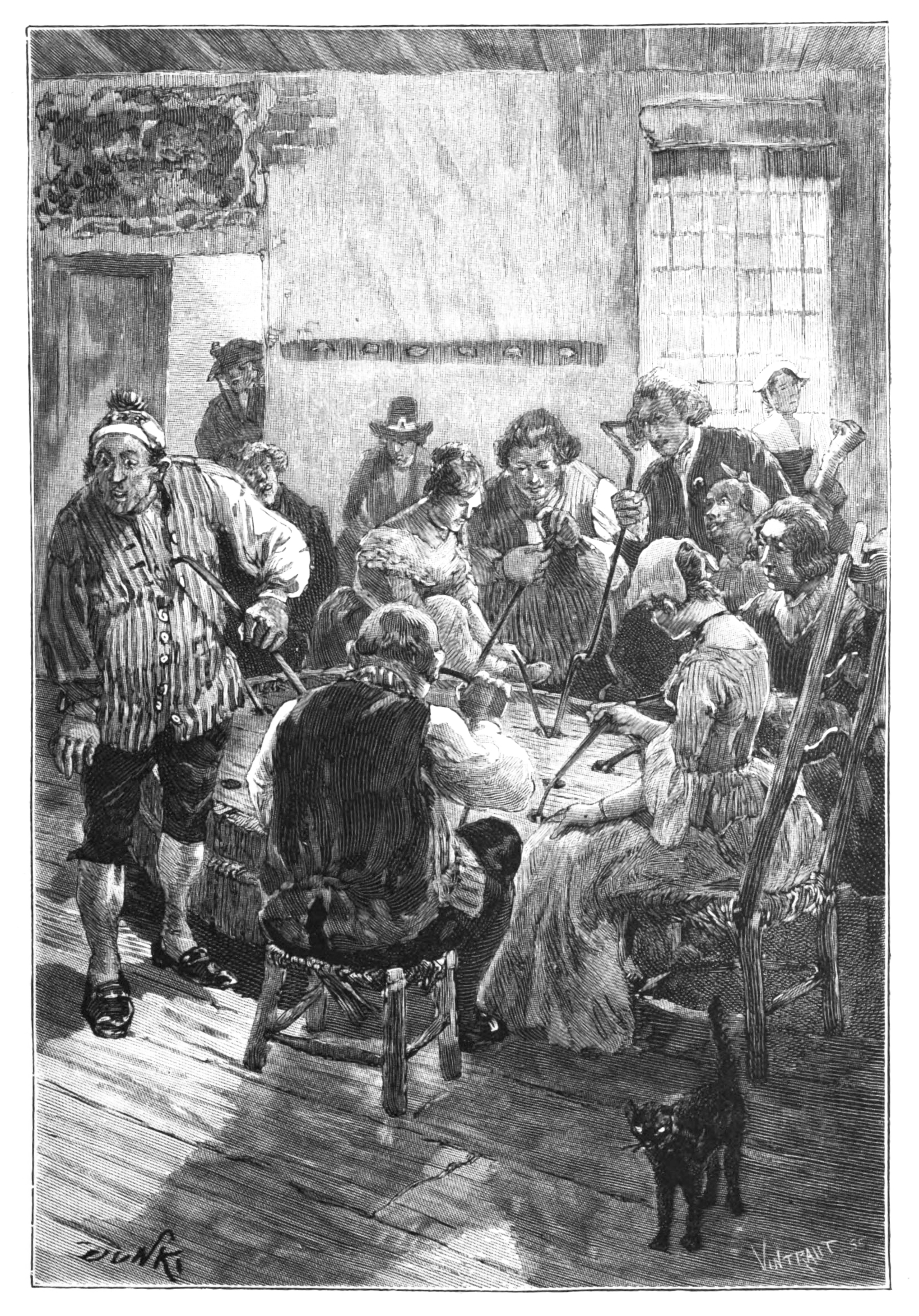
The public treatment room supplied an impressive theatre of sensations. Patients sat around a wooden vessel, the baquet, fitted with bent iron rods. Ropes and linked hands connected participants; music accompanied the sessions. Practitioners used their hands, rods and concentrated attention. Some patients remained quiet, while others experienced warmth, distress or convulsive movements. The commissioners recorded these reactions rather than simply denying that anything happened. Their crucial question was whether the alleged magnetic agent caused the reactions, or whether touch, anticipation and the example of other participants could explain them. [1]
To investigate, they separated what subjects believed from what practitioners actually did. In some tests, blindfolded participants were led to expect magnetization when none was applied; in others, procedures occurred without their knowledge. A much discussed experiment involved a boy and trees in Franklin’s garden at Passy: his reactions did not reliably identify the tree designated as magnetized. These arrangements were early examples of using concealment and comparison to test a causal claim. They should not be described as modern randomized clinical trials, with contemporary sampling, statistical analysis or standardized outcome measures. [1]
The report, signed in August 1784, found no demonstrated animal magnetic fluid and attributed the observed effects to touch, imagination and imitation. In eighteenth-century language, imagination could produce bodily consequences; it did not necessarily mean conscious deception. The conclusion challenged an explanation, not the sincerity of every patient. An English translation published in London in 1785 illustrates the inquiry’s circulation beyond France. Its transatlantic significance also lay in Franklin’s participation: the controversy connected European medicine, public authority and an internationally prominent American investigator. [1–3]
For the history of esotericism, the episode offers a durable distinction between experience and mechanism. A dramatic response can deserve attention without proving the invisible substance invoked to explain it. The investigation did not settle every later question about suggestion or altered states. Its lasting lesson is methodological: describe what occurred, identify competing explanations, and design comparisons capable of telling them apart. [1]
A Feng Shui interpretation
A Feng Shui interpretation begins with an explicit boundary: the 1784 report provides no evidence that Mesmer or the commissioners used Chinese geomancy. Mesmer’s magnetic fluid and qi belong to different intellectual traditions. Translating both loosely as “energy” does not establish that they are the same entity, measurable process or historical teaching. The connection developed here is a contemporary philosophical comparison, not a claim about documented influence.
Feng Shui invites attention to relationships between people, spatial arrangements and their surroundings. Seen through that lens, the baquet was more than a container: it organized proximity, direction of attention and participation. Music, the placement of chairs and the central object made the room a coherent social setting. This is our interpretation of the recorded arrangement. It does not demonstrate that a magnetic reservoir or a particular flow of qi existed.
The complementary language of yin and yang offers another reflective tool. Quietness and activity, enclosure and openness, can suggest questions about whether a gathering allows both concentration and personal freedom. A room dominated by collective excitement may leave little space for someone who wishes to pause. Balance here means an ethical design intention rather than a diagnosis of the eighteenth-century patients or an explanation of their symptoms.
For a present-day meditation or community room, this comparison suggests clear exits, comfortable seating, moderate sound and the option to participate without touch. Make changes separately and ask users what improves their comfort. The commission’s example encourages that practical scrutiny. Feng Shui can provide a vocabulary for reflecting on place and belonging; evidence for a proposed physical mechanism still requires appropriate tests. Neither historical symbolism nor a pleasing arrangement establishes a medical treatment.
Sources and further reading
- Original report (1784)
- Wood Library-Museum: catalogue and historical summary
- Wellcome Collection: English translation (1785)
Let’s discuss about this here…
What Is Feng Shui? — Explore the basics and ask questions in our forum.