 English
 Français
 Deutsch
 Italiano
 Español
 Português
Historical context and a contemporary philosophical interpretation. The analysis section contains 750 words, excluding headings.
The historical event
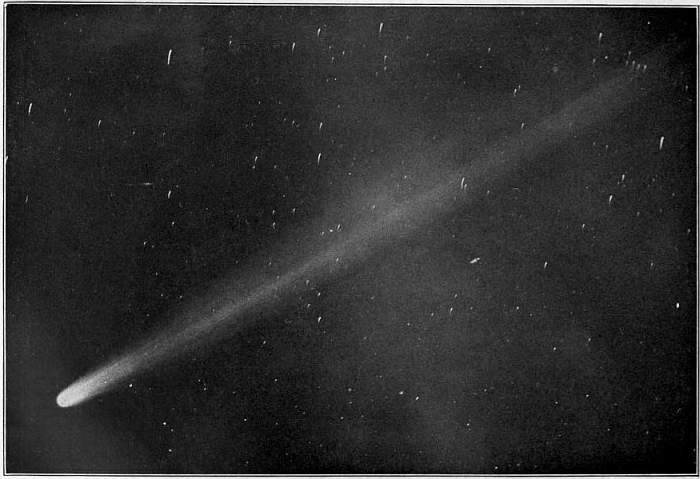
Halley’s comet returned in 1910 as a widely observed celestial event. NASA explains its roughly 76-year cycle and records Earth’s passage through its tail during that apparition. The Library of Congress documents sensational newspaper claims, public anxiety and protective merchandise; the May passage caused no atmospheric disturbance. These sources establish the historical setting. The interpretation below explores celestial omens, cycles and the experience of dwelling through Feng Shui philosophy. It does not claim that Feng Shui caused the event or predicts astronomical danger.
Historical references: NASA Science, NASA History and the Library of Congress.

Feng Shui analysis: omens, cycles and a shared sky
A relationship, not a celestial diagnosis
The relationship between Halley’s return and Feng Shui begins with a question: how do people inhabit a changing world? Feng Shui traditions connect orientation, landscape, timing and human life; the Spurlock Museum describes the luopan, qi, yin and yang, and bagua within that cultural setting. Applying these ideas to 1910 is a contemporary interpretation, not evidence that the comet changed a home’s fortune. Astronomy explains the physical visitor. Philosophy can examine how its appearance reorganized attention, fear and belonging. Keeping those tasks distinct makes the comparison more useful.
Heaven, earth and the human scale
A comet seems to bring the remote heavens into everyday experience. In 1910, an immense astronomical process became something discussed beside windows and around household tables. A Feng Shui reading can treat this encounter as a reminder that dwelling involves relationships beyond the walls. Weather, daylight, neighbours and shared information already connect a room to larger systems. The lesson is not that everything outside secretly commands us. It is that a place becomes intelligible through its connections, and that good judgment considers which connections are materially relevant rather than merely dramatic.
Qi as a question about circulation
Within traditional Feng Shui, qi is a culturally situated account of vitality and environmental relationships. Here, its circulation offers a metaphor for examining how news moved through communities. Information can nourish understanding, but repeated alarm can also crowd out observation. The useful practical question is how a household receives, discusses and releases disturbing claims. A clear reading space, an unhurried conversation and access to trustworthy explanations can support reflection. These arrangements do not repel comet gases or manipulate an astronomical force; they shape the human conditions in which people interpret uncertainty.
Yin and yang without false equivalence
The contrast between the bright apparition and the dark sky invites a yin and yang interpretation, but the deeper issue is complementary activity. Looking outward needs a counterpart in inward reflection; excitement needs intervals of rest. Balance does not mean giving unsupported disaster predictions equal authority with measured evidence. It means allowing curiosity to remain active without making constant agitation the household’s normal rhythm. In this reading, closing a newspaper and restoring a familiar evening routine can be a thoughtful boundary, not a refusal to learn about an unfamiliar world.
The five phases as an interpretive exercise
The five phases can organize questions without pretending to classify a comet scientifically. Water suggests the unknown and the need to listen; Wood, the growth of knowledge; Fire, visibility and emotional intensity; Earth, dependable routines; Metal, the discipline of distinguishing a claim from its evidence. These associations are selected for this essay, not an ancient prescription for Halley’s orbit. Their value lies in moving between perspectives. When spectacle dominates, ask what grounding is missing. When reassurance becomes complacency, ask what further observation or clearer explanation would improve the conversation.
Bagua and the ethics of the centre
A bagua-inspired reflection asks where attention is being placed and what is disappearing from view. During a spectacular event, the imagined centre of life can migrate entirely toward the sky, while meals, companionship and ordinary responsibilities become peripheral. A considered home does not exclude wonder; it gives wonder a place among other needs. This is also a social question. Reassurance is easier when people have time, education and reliable information. Harmony should therefore include sharing understanding patiently, rather than judging frightened neighbours or selling symbolic protection as if it guaranteed physical safety.
Thresholds that welcome without overwhelming
The threshold between home and world provides another useful image. A door or window can welcome observation while preserving a place for recovery. Translated into practice, that might mean choosing a time to look at the sky, discussing what reputable sources actually say, and keeping shared spaces available to people who prefer quiet. No compass bearing makes a person immune to uncertainty. What matters in this interpretation is proportion: the outside event deserves attention, but it need not occupy every room, every conversation or every moment of family life.
Interpreting an omen while preserving agency
An esoteric reading can understand the comet as a symbol of recurrence and human finitude without declaring it an instruction from fate. Its return outlasts many individual biographies, inviting humility about the scale of our plans. Yet humility need not become helplessness. The most constructive Feng Shui interpretation of 1910 asks how relationships, spaces and habits can sustain thoughtful action under a shared sky. The event becomes a prompt to care for the world we inhabit, not a verdict upon it: observe carefully, distinguish symbolism from causation, and make room for one another. Such a reading respects historical difference: it neither claims that all observers shared one cosmology nor turns a worldwide astronomical spectacle into proof of a single tradition.
Sources and further reading
- NASA Science — 1P/Halley
- NASA History — Halley’s comet across cultures and its 1910 apparition
- Library of Congress — Halley’s Comet: Topics in Chronicling America
- Spurlock Museum, University of Illinois — Navigating Fengshui
Discuss this article in the forum
What Is Feng Shui? — Explore the basics and ask questions in our forum.