Tag: Politics

Explore politics through Chibagua’s sourced current-event analyses and Feng Shui philosophy. Read the articles and join the community discussions.

  • Brazil Heads to a Presidential Runoff: A Feng Shui Reading of Polarization, Balance and Collective Choice

    Brazil’s first presidential round produced a close contest and sent the country toward a runoff. The result is not merely a contest between personalities: it reorganises public attention, alliances and the emotional use of civic space. This article offers a distinct post-result Feng Shui reading focused on thresholds, polarisation and collective choice. This is an interpretive essay about relationships between people, systems and environments. Feng Shui does not cause, predict or scientifically explain the event; factual claims remain grounded in the cited reporting.

    The verified event and the reporting boundary

    With 99.99% of votes tallied, Agência Brasil reported Flávio Bolsonaro at 47.03% and Luiz Inácio Lula da Silva at 45.16%, leading to a second round. Brazil’s Superior Electoral Court provides the official results system and voter information; Associated Press and DW reported the outcome and runoff context. Reporting checked on 5 October 2026; official updates remain decisive. [S1] [S2] [S3] [S4]

    Brazilian National Congress buildings in Brasília
    Brazil’s National Congress in Brasília. Photograph by Eurico Zimbres, CC BY-SA 2.5, via Wikimedia Commons. License and source.

    1. Why this event belongs in a discussion of place

    Feng Shui begins with relationship: a room depends on entrances, routes, maintenance and the people who use it. Public events reveal the same hidden dependencies at another scale. The useful question is not which decoration symbolises the news, but which relationships keep ordinary life workable, who can use them, and where pressure accumulates.

    A runoff is literally a threshold: the field narrows and every passage becomes more charged. Feng Shui warns that a narrow entrance can clarify direction but can also intensify congestion. Democratic legitimacy therefore depends not only on the winner, but on reliable procedures, access to information, safety for participation and a path through which disagreement can continue without becoming dehumanisation.

    2. Chi as an analogy for movement, not a causal claim

    Traditional language about chi directs attention to movement, gathering and obstruction. Here “flow” is a transparent analogy, not a statement that money, votes, ships or fuel are identical to qi. The analogy is valuable only when it sharpens evidence-based questions: what moves, through which route, under whose rules, toward whom, and at what cost?

    3. Yin and yang: holding tension without false equivalence

    Yin and yang describe interdependent tendencies rather than teams of good and evil. Stability and change, protection and openness, urgency and patience may all be necessary. Balance is not a bland midpoint and it does not make unequal harms equivalent; it is the capacity to respond without allowing one tendency to erase every other need.

    Polarisation tempts people to treat balance as equal distance from every claim. That is not the meaning used here. Yin and yang invite attention to interdependence and consequences, while facts, rights and electoral law remain non-negotiable boundaries. A healthy civic centre needs institutions strong enough to hold conflict and citizens able to recognise one another after the vote.

    4. The five phases as a diagnostic sequence

    The five phases can be used as a sequence of questions rather than a prediction. Wood asks what can grow; fire where intensity and visibility rise; earth what supports daily life; metal which rules and structures organise action; water how adaptation and uncertainty are managed. This contemporary exercise must remain distinct from technical traditional calculations.

    5. A bagua reading of connected life areas

    A bagua reflection links livelihood, knowledge, relationships, support, recognition, creativity, family and health around a centre. It does not map nations or leaders onto “lucky corners”. Its value is relational: pressure in one domain often travels into others. Policy and news become spatial when they alter journeys, rest, access, conversation and the use of shared rooms.

    6. Thresholds, centres and bottlenecks

    Feng Shui pays close attention to doors, corridors, junctions and the open centre. A threshold that carries too much traffic becomes fragile; a blocked centre makes every route harder. This offers a disciplined way to notice concentration and bottlenecks, while technical causes still require economics, law, engineering or political analysis.

    7. Scale, power and ethical responsibility

    Spatial advice must never blame individuals for collective conditions. A household cannot rearrange away war, unemployment, institutional polarisation or a global supply shock. Responsibility follows power: governments, companies and institutions must address the systems they control. Personal practice can support clarity, accessibility and mutual care, but it cannot replace public action.

    8. A practical reflection for homes and communities

    A constructive response begins with a real routine. Identify one route, shared surface or decision point affected by the event; ask who uses it, who waits, and who does invisible maintenance. Make one small reversible change—clear information, an agreed meeting place, a calmer transition, or a backup plan—and discuss it with everyone affected.

    At home or in a community group, political news can occupy every shared surface. Create a clear time and place for discussion, establish rules against insults, keep an exit from the conversation, and protect meals, sleep and children’s spaces from nonstop campaigning. These spatial choices do not solve national polarisation, but they can preserve dignity and listening locally.

    9. What to observe over the next week

    For seven days, record where friction appears and whether it is reduced or merely transferred to someone else. Separate observation from interpretation. Avoid panic buying, unsafe work, financial speculation or symbolic remedies presented as guarantees. If building, electrical, legal or financial issues arise, consult a qualified professional.

    10. A responsible conclusion

    A responsible Feng Shui reading ends with clearer relationships rather than certainty. It asks whether flows reach people, whether centres remain usable, whether reserves and alternatives exist, and whether change preserves dignity. The event should be judged through evidence as it develops; philosophy contributes questions, attention and an ethic of care.
    Sources and further reading

    Let’s discuss about this here….

  • Brazil’s October 2026 Election: A Feng Shui Reflection on Shared Civic Space

    An election is often presented as a contest between personalities, but it is also an encounter between people and a shared environment: streets, institutions, information channels and places where disagreement becomes visible. Brazil’s general election offers a moment to reflect on these relationships through Feng Shui philosophy. This essay does not favour a candidate, predict the result or suggest that spatial symbolism determines how citizens vote.

    The verified event and the reporting boundary

    Brazil holds its first-round general election on 4 October 2026, as confirmed by the TSE. Agência Brasil reports about 158.7 million eligible voters. AP describes the presidential contest led by Lula and Flávio Bolsonaro. [S1] [S2] [S3] This essay was checked on 4 October and makes no claim about a winner; consult official results as they become available.

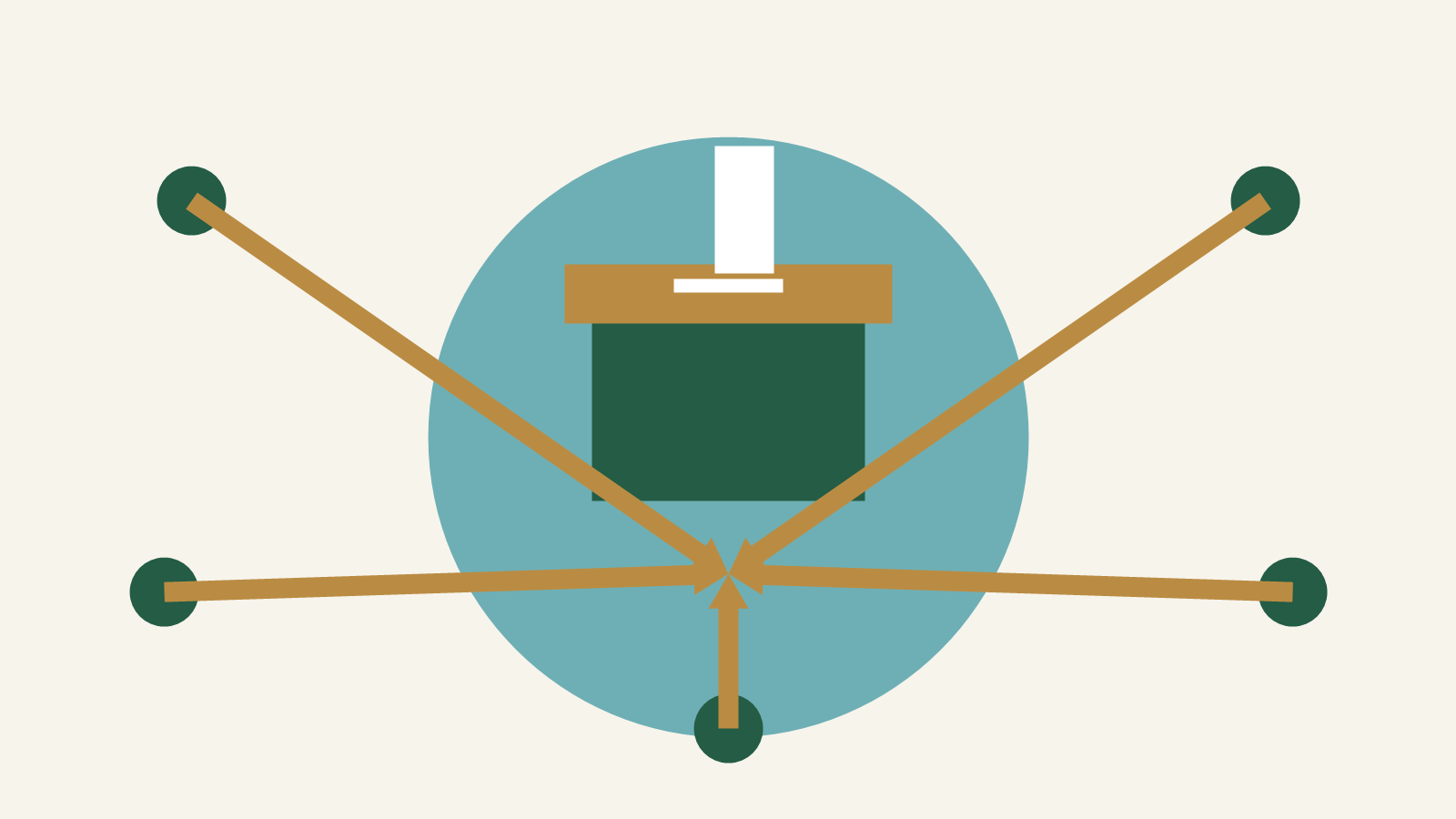
    Original illustration of a ballot box and different paths entering a shared civic square
    Different paths into a shared civic space. Original conceptual illustration, not an election photograph. Chibagua, CC0 1.0. CC0 1.0

    1. The connection is participation in a place

    A philosophical reading of Feng Shui attends to relationships between inhabitants and surroundings. Civic life also depends on such relationships, although political institutions cannot be reduced to a domestic floor plan. People need routes to participation, places to exchange ideas and confidence that a shared system can accommodate difference. The connection is therefore an inquiry into the conditions of participation, not a technique for discovering an auspicious president.

    A polling place provides a concrete starting point for reflection. An entrance may be visible but difficult to reach; a queue may be orderly but demanding for someone who cannot stand comfortably; information may be available but difficult to understand. These are general examples, not allegations about Brazilian voting arrangements. They show why the appearance of an open space and the experience of access are distinct questions.

    2. Chi as an analogy for circulation of attention

    When practitioners discuss chi, they may describe qualities of movement, gathering and interaction using a traditional vocabulary. Here we use circulation as a modern analogy for information and attention. A message is not qi in a measurable physical sense, and a rumour is not an elemental imbalance that can be corrected by moving furniture. Claims about election procedures and results require official documentation and reliable reporting.

    The analogy can still ask whether attention moves through useful channels or repeatedly becomes trapped in anxiety and repetition. Does a conversation allow questions to be answered? Can participants distinguish a verified fact from a prediction? Is there a path back to the original source? These questions apply to a home discussion or a community forum. They encourage clearer communication without pretending to explain the political preferences of an entire country.

    3. Yin and yang do not mean two parties

    It would be tempting to label rival candidates yin and yang, but that would flatten both politics and Chinese philosophy. Complementary tendencies are not a convenient way to turn every binary conflict into a cosmic balance. Political differences concern institutions, interests, values and consequences. Some claims are better supported than others, and some actions can be harmful. Philosophical language should not erase those distinctions.

    A more careful use of the analogy examines the relationship between speaking and listening, conviction and reconsideration, activity and reflection. A civic setting needs opportunities for expression as well as spaces where people can check a claim or pause before responding. This does not demand that everyone become emotionally neutral. It asks how a shared environment can sustain reasoned disagreement without making constant confrontation its only available rhythm.

    4. Harmony is not the disappearance of disagreement

    If harmony means that everyone must agree, an election becomes evidence of failure merely because choices differ. We propose a more useful interpretation: harmony is the capacity to share a setting while differences remain discussable. At home, this might mean that several routines coexist without one person’s needs always being dismissed. In civic life, it points toward the practical conditions that allow disagreement to be expressed through legitimate processes.

    This analogy cannot decide constitutional questions or replace legal expertise. It can, however, remind readers that a beautiful public square is incomplete if some people do not feel able to enter it. The question is not how to decorate away conflict, but how to preserve participation, dignity and the ability to continue living together after a contested choice. Peaceful disagreement may be more demanding than a superficial image of unanimity.

    5. Five phases as a cycle of civic care

    For a contemporary reflective exercise, consider five activities: developing proposals, bringing issues into public view, sustaining everyday support, establishing accountable procedures and adapting after experience. We connect these loosely to growth, intensity, grounding, structure and change. This is Chibagua’s interpretive exercise using five-phase language; it is not a traditional electoral formula or a method for assigning favourable elements to candidates.

    The exercise helps prevent election day from becoming the whole story. Public life also involves preparation, maintenance and what happens after a decision. A campaign can be highly visible while quieter work receives little attention. Ask which activity is missing from your own community conversation. Are people only amplifying messages, or also checking information, helping others understand participation and discussing how commitments can later be assessed?

    6. Bagua, mapping and the danger of false certainty

    Different bagua methods organise attention in different ways. Without a named method and the relevant spatial information, it would be misleading to assign auspicious sectors to Brazil or its institutions. This essay makes no compass reading of the country. Instead, it asks how a reflective map can help us remember several dimensions of shared life: learning, relationships, livelihood, support and the possibility of rest.

    A map selects what we notice. That is its usefulness and its limitation. A discussion focused solely on political identity can overlook daily needs; one focused only on comfort can overlook accountability. Do not let a symbolic diagram make a claim look more certain than its evidence permits. A responsible interpretation adds questions to public conversation and remains open to people whose experience is absent from the proposed map.

    7. Reciprocal Inhabitation and the civic commons

    Reciprocal Inhabitation is Chibagua’s modern proposal about place, practices and care shaping one another over time. Applying it to civic life is an analogy, not a claim that an election is governed by household Feng Shui rules. Institutions provide conditions for participation; people use, challenge and maintain those conditions; subsequent care affects whether participation remains possible. No diagram removes the need to examine actual procedures.

    Its four prompts clarify the analogy. Invitation asks whether people understand how to participate. Passage asks what routes and processes let them do so. Permission asks whether access is experienced as meaningful and respectful. Return asks how shared life continues after the event. These are analytical questions, not assertions that any particular Brazilian institution has failed them. They can also be applied to Chibagua’s own discussion space.

    8. A household conversation as a worked example

    Imagine relatives gathering around a table to follow election news. Some want continuous live coverage; others want a quiet meal. One person repeatedly reads unverified messages aloud, while another stops participating because each question becomes an argument. No colour or object can guarantee agreement. The useful intervention concerns how the shared setting supports attention, boundaries and a fair opportunity to speak.

    An agreed period for checking official updates, a place to keep source links and a pause in news alerts during a shared activity may help. These are optional arrangements to discuss, not instructions to suppress anyone’s political views. Ask whether the change creates room for everyone or merely protects the preferences of the loudest member. The outcome to observe is the quality of participation, not whether the household reaches a single political opinion.

    9. Public landscapes and the limits of a household lens

    Political decisions concern collective environments as well as private rooms. Readers can ask how proposals address public access, maintenance, ecological responsibility and the places where people earn a living. This is a way to read proposals carefully, not an assertion that any candidate’s programme embodies a particular element. Each claim should be evaluated through the actual policy, its evidence and its likely consequences.

    The household analogy must also recognise power. A citizen cannot simply rearrange national infrastructure as they might move a chair. Collective change requires institutions, resources and participation over time. Feng Shui reflection is useful here if it encourages attention to interdependence and the experience of place. It becomes misleading if it tells disadvantaged people that their circumstances result from insufficient personal harmony or an unfavourable corner.

    10. A practical exercise for a more thoughtful forum

    Choose one claim about the election. Identify whether it concerns a verified procedure, a reported development, a forecast or a personal preference. Locate the original source and date it. Then write a separate paragraph explaining what the event makes you notice about shared space or participation. Keeping these paragraphs distinct prevents an appealing philosophical interpretation from being mistaken for evidence about the election itself.

    In the forum, discuss the analogy respectfully and leave room for correction. Do not infer another member’s identity, motives or worth from political disagreement. Ask which arrangement makes a conversation easier to enter and how it can be cared for after a heated exchange. Our interpretation concludes that civic harmony is a practice of maintaining shared possibilities, not a prediction of victory. The election’s factual outcome belongs to verified reporting and official results, while its philosophical meaning remains open to discussion.

    Sources and further reading

    Let’s discuss about this here….