English
 Français
 Deutsch
 Italiano
 Español
 Português
A fuel announcement can seem far removed from the arrangement of a home. Yet fuel connects distant decisions to journeys, deliveries, heating and the time people have available for care. The latest G7 decision offers an opportunity to examine these connections through Feng Shui philosophy. This is an interpretive essay about relationships between people and environments, not a claim that Feng Shui explains oil prices or determines geopolitical outcomes.
The verified event and the reporting boundary
On 2 October 2026, the G7 announced a 100-million-barrel release of crude oil and diesel. Euronews describes the agreement; Associated Press reports its emergency context. The IEA explains why emergency stocks support supply security rather than replace long-term energy policy. [S1] [S2] [S3] Reporting checked on 4 October 2026; implementation and market effects remain developing.
1. Why an energy event belongs in a discussion of place
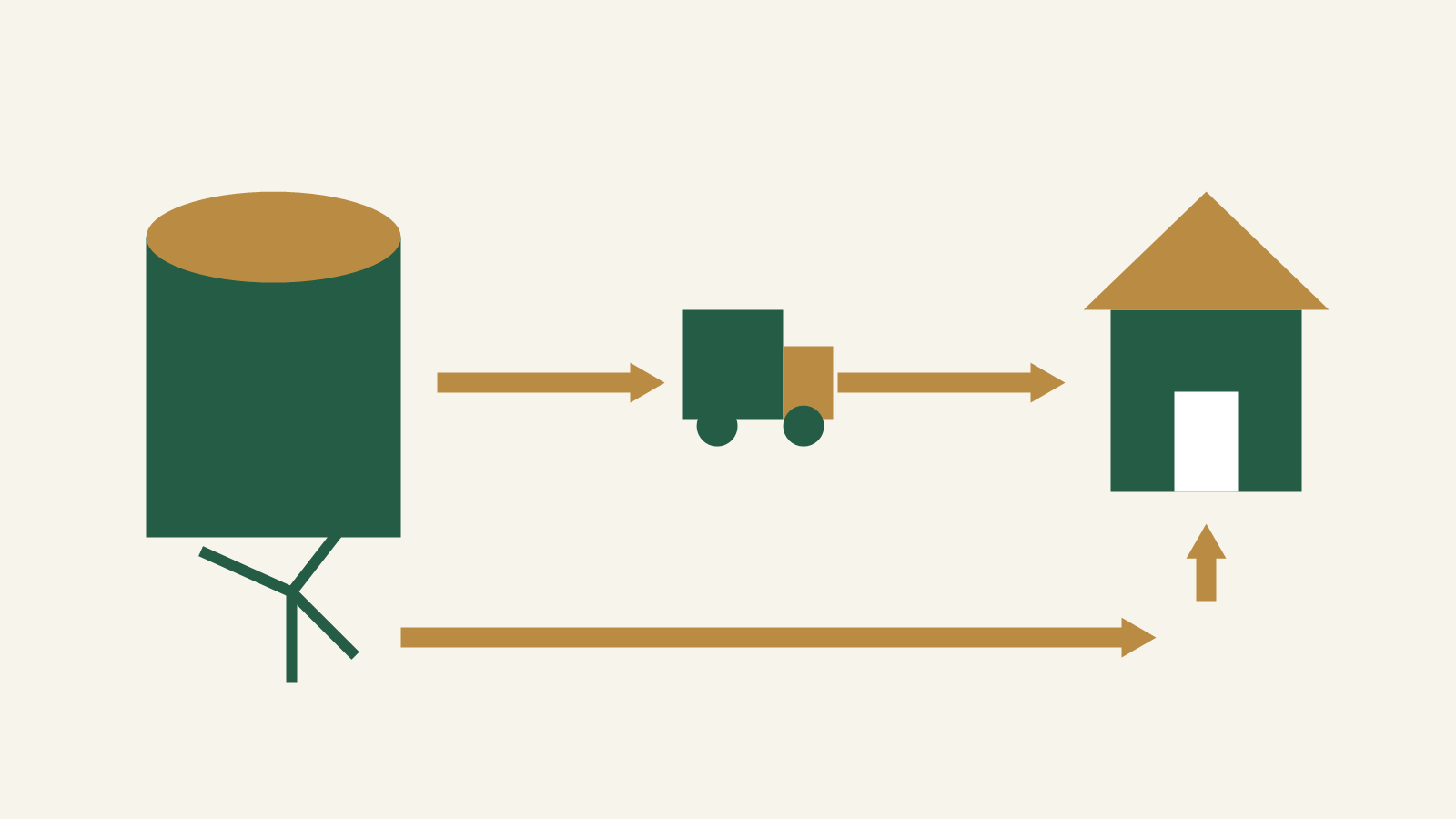
Feng Shui asks us to attend to a place in relation to its surroundings. A dwelling is never entirely self-contained: its apparent calm depends on supply routes, services, infrastructure and human work beyond its walls. An energy disruption exposes that wider setting. A comfortable room is also connected to how people reach work, how materials arrive and how essential routines continue. The philosophical connection therefore begins with dependence, rather than with a decorative correspondence between a barrel of oil and an element.
Our interpretation is that a home should be understood as a supported relationship. This does not make a national economy a large house or turn international policy into a compass calculation. It gives us a useful question: which external relationships allow this place to remain habitable, and which are so concentrated that their interruption leaves people few alternatives? The news becomes an invitation to look beyond appearances.
2. Flow is useful only when it reaches people
The traditional language of chi can encourage attention to movement, gathering and obstruction. In this essay, we use flow as a clearly labelled analogy for material supply and everyday activity. Oil molecules, electrical current, money and traditional qi are not interchangeable quantities. Economic analysis must still examine production, refining, transport, contracts and demand. Feng Shui vocabulary cannot substitute for those mechanisms.
The analogy nevertheless reveals an ethical issue: a system can move a large volume of resources while failing to serve those who need them. Ask where supply arrives, who can afford access and what activity it sustains. At home, a clear corridor is valuable because someone can move through it, not because it looks clear in a photograph. Similarly, the meaningful outcome of emergency supply is continuity of essential life, not the headline number alone.
3. Reserves: the value of space that is not constantly used
A reserve represents capacity kept available for a difficult moment. We propose comparing it with the unoccupied space around a doorway, the spare time before an appointment or a shelf that has not been filled to its limit. These are different systems, but each raises a question about the value of unused capacity. If every resource must appear fully employed at every moment, there is little room to absorb interruption.
This is not a recommendation to hoard fuel or buy large quantities of goods. Household storage has practical, financial and safety limits, and local rules matter. The philosophical lesson is to resist equating emptiness with waste. A modest, accessible arrangement can be more robust than a crowded one. At policy scale, a reserve also needs maintenance and a plan for replenishment; at household scale, spare capacity needs an agreed purpose rather than becoming an excuse for accumulation.
4. Yin and yang: relief now and renewal over time
Yin and yang can help us reflect on complementary tendencies without assigning moral labels to fuels, countries or politicians. Here the proposed contrast is between stabilising existing routines and changing the conditions that make them vulnerable. Immediate relief can matter profoundly, while longer-term adaptation asks different questions. Treating either as sufficient on its own overlooks the relationship between urgency and duration.
The IEA’s distinction between emergency response and long-term policy is a factual boundary, not a validation of our analogy. [S3] Our interpretation is that balanced attention would protect people during disruption while preserving the ability to change later. A room provides a small illustration: fixing today’s obstructed entrance does not answer whether the storage arrangement repeatedly recreates the obstruction. Emergency action and structural redesign can support each other when their purposes remain clear.
5. Five phases as questions, not an economic forecast
The five phases—wood, fire, earth, metal and water—belong to traditional systems with particular correspondences and relationships. We are not using them to forecast markets. Instead, we offer a contemporary exercise: growth asks what new capacity is possible; intensity asks where pressure is rising; support asks what everyday life depends on; structure asks how rules organise access; adaptability asks how a system responds to change. This is our interpretive adaptation, not a traditional formula.
Applied to the announcement, these questions direct attention beyond extraction alone. What practical alternatives are available? What work sustains the network? Who bears the costs of a rule? What happens when a route fails? The exercise is useful only if it produces specific questions that can be investigated with evidence. If it merely attaches an elemental label to a policy and declares it fortunate, it has added a symbol without improving comprehension.
6. A bagua reflection without mapping countries to corners
A bagua can serve as a reflective framework, but methods differ and should be named when used. This article does not place G7 members in auspicious sectors or suggest that a room’s wealth area changes fuel prices. For a household reflection, consider the relationship between livelihood, learning, support and rest. An energy shock may put pressure on several of these at once, even if the household has made no change to its furnishings.
This matters because advice focused exclusively on a prosperity corner can individualise a collective problem. A person’s difficulty paying for transport is not evidence of an incorrectly arranged home. The more constructive question is which functions need support and what realistic changes are available within that person’s circumstances. Symbolic reflection should increase agency and understanding, while leaving responsibility for public policy with the institutions that make it.
7. Reciprocal Inhabitation connects the layers
Chibagua’s Reciprocal Inhabitation concept describes an ongoing exchange between a place, practices and care. It is a modern educational proposal, not an ancient doctrine or a proven scientific law. The energy event gives this concept a wider setting: external supply supports activities, activities create needs, and maintenance keeps the relationship workable. The aim is to make hidden dependencies visible rather than to explain them mystically.
Use its four prompts: invitation, passage, permission and return. What does a place allow people to do? What routes enable that activity? Who actually has access? What work restores the system after use or disruption? A reserve release primarily invites us to examine passage and return, but access remains central. A supply route that is restored without considering affordability may look functional from a distance while leaving some households unable to participate.
8. A practical household example
Imagine a household sharing a small kitchen table, one car and irregular working hours. News of fuel uncertainty creates pressure to plan journeys and expenses. Buying a symbolic object cannot resolve that uncertainty. A modest spatial intervention might instead create a shared planning surface, an accessible place for essential information and a clear transition between work and meals. The point is to reduce avoidable friction while accepting the limits of personal control.
Discuss changes with everyone affected. Do not assume that one person can absorb extra planning, unpaid care or longer journeys. A more efficient routine for one member may become a heavier burden for another. Compare options against time, access and actual needs. This is a worked example of our philosophy, not a prediction about household savings or financial advice. The best arrangement is the one the people involved can realistically maintain.
9. A week of observation rather than panic purchasing
For two days, note one routine connected to energy: a journey, a delivery-dependent task or the use of a shared work area. Record what happens, where delay appears and whose time is affected. Keep private account details and financial information out of community posts. On the third day, choose one small, reversible improvement to the routine or its supporting space. Avoid changes involving electrical equipment, fuel storage or building systems without appropriate professional guidance.
For the rest of the week, ask whether the change reduced friction or merely transferred it. Did everyone understand the arrangement? Could it be maintained? Did it preserve rest and accessibility? This exercise produces local observations, not scientific proof of Feng Shui. It is deliberately modest: thoughtful preparation can support daily life, but it cannot guarantee protection from a global price shock or replace competent energy policy.
10. What a responsible interpretation concludes
Our Feng Shui reading of the G7 announcement is about the conditions that sustain inhabitation. Flow needs routes and recipients; reserves need care; temporary relief needs a longer horizon; efficiency needs space for interruption. These principles are questions for reflection, not an endorsement of every detail of the agreement. Judging the actual policy requires evidence about implementation, distribution and consequences as they emerge.
Bring a concrete example to the forum: where does your daily environment depend on an external network, and what small change would make that dependency easier to understand or manage? Name any traditional method you apply and separate its interpretation from factual claims. Debate the analogy itself as well as the event. A useful Feng Shui philosophy makes relationships clearer and leaves people more able to discuss their circumstances without blaming them for conditions beyond their control.