Author: Chibagua Editorial Team

  • Shared Space, Different Priorities: AI and Strategic Risk After the US–China Summit

    On 24 September 2026, US President Donald Trump and Chinese President Xi Jinping met in Washington. Reuters reported that their talks addressed trade, artificial intelligence (AI), Taiwan and strategic rivalry. US Treasury Secretary Scott Bessent said a trade truce would be extended by two months. Reuters found no major breakthrough on the central disputes. The meeting matters beyond both countries: their trade and technology choices can affect people and businesses worldwide.
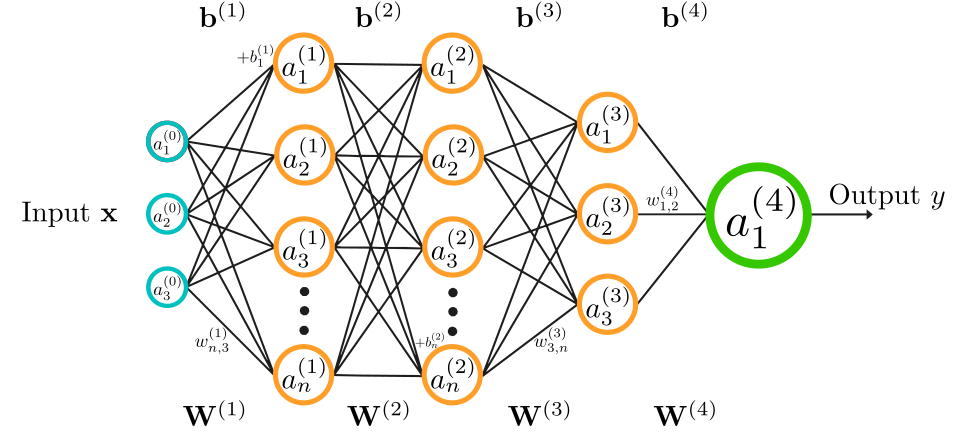
    Conceptual diagram of an artificial neural network, with connected layers of nodes
    Conceptual diagram of an artificial neural network; not an account of the summit · QuantuMechaniX8 · CC0 · Wikimedia Commons

    What was said, and what remains open

    Reuters reported different public emphases on AI. Trump said he opposed new guardrails and asserted that China shared his position. Xi said both countries should develop and manage AI so that it remains under human control and serves people’s well-being. These are attributed statements, not a jointly agreed policy. AP had reported before the summit that the two countries shared some concerns about AI risks despite deep competition; its report described proposals for dialogue, not an agreement reached at this meeting.

    On Taiwan, China’s official news agency said Xi urged US prudence. Reuters reported no sign that Washington had changed its established wording. There was no immediate White House account of that exchange in Reuters’ report. We should therefore avoid presenting either side’s description as a settled bilateral commitment. The two-month trade extension is likewise a pause, not proof that underlying disagreements have been resolved.

    A Feng Shui philosophical reading

    Feng Shui asks us to pay attention to relationships within a shared setting: how boundaries, movement and competing needs can coexist. Applied as a metaphor to diplomacy, this suggests three useful questions. Where is there room for dialogue? Which differences need clear boundaries? Whose lives are affected by decisions made in a small room? Balance here does not mean treating unequal claims as equally supported, nor does it imply that arranging a room changes international outcomes.

    Readers can compare the leaders’ own statements with independently reported outcomes, distinguish a proposal from a signed measure, and discuss whether channels for communication help manage disagreement. They can also ask how AI’s benefits and risks are distributed beyond the two governments. This is a way to structure respectful discussion, not a method for predicting policy or preventing conflict.

    Sources

    This Feng Shui discussion is a philosophical interpretation, not scientific, medical, legal, financial, architectural, military or safety advice. It makes no causal claim about the summit.

    Let’s discuss about this here….

  • Galleri’s FDA panel vote: promise, uncertainty and supportive spaces

    An advisory panel to the U.S. Food and Drug Administration has voted in favor of the overall benefit–risk profile of GRAIL’s Galleri multi-cancer early detection blood test. The 10-member panel voted 7–2, with one abstention, that its benefits outweigh its risks; it unanimously supported safety and voted 6–4 for effectiveness. The recommendation is important, but it is not final FDA approval.

    Illustrated DNA helix; conceptual image, not the Galleri test
    DNA symbol (conceptual) · Fvasconcellos · Public domain · Wikimedia Commons

    What the test does—and what remains uncertain

    Galleri looks for cancer-associated methylation patterns in blood and is designed to identify signals linked to more than 50 cancers, including some without routine screening. A positive signal still requires diagnostic investigation. False-positive and false-negative results can occur, and the test is intended to be used in addition to, not instead of, guideline-recommended screening.

    The central question is whether earlier signals lead to better health outcomes at population level. Advisory support does not remove uncertainty about mortality benefit, overdiagnosis, follow-up procedures, cost and equitable access. FDA will make its own decision after completing its review.

    A careful Feng Shui perspective

    Feng Shui cannot detect, prevent or treat cancer. Its useful role here is modest: it can encourage a supportive setting for people dealing with medical uncertainty. In common Bagua practice, the Zhen area is associated with health and family. This symbolism should be treated as a prompt for care—not as a medical claim.

    A practical approach is to create a clear place for health information, keep pathways uncluttered, provide comfortable light and seating for conversations, and reduce avoidable distractions before appointments. These choices may support calm and organization, but they cannot change a test result or replace professional care.

    How to approach the news

    • Distinguish an advisory-panel recommendation from FDA approval.
    • Ask what evidence shows about outcomes, not only detection rates.
    • Continue established screening recommended for your age and risk.
    • Discuss personal decisions with a qualified clinician.

    Sources: FDA advisory-committee meeting record; GRAIL’s report of the panel vote.

    This article is general information, not medical advice. Feng Shui is not a diagnostic or therapeutic method.

    Let's discuss about this here….

  • Italy’s proposed school rules: belonging in a shared classroom

    What was announced

    On 20 September 2026, Prime Minister Giorgia Meloni announced proposals to prohibit face-covering veils such as the niqab and burqa in schools and limit the number of foreign students in each classroom. She also proposed Italian lessons for parents of students facing integration difficulties. The precise classroom cap was not given. These are proposals, not rules already in force.

    Generic illustrated school building, not a specific school in Italy
    School symbol · BMacZero · CC0 · Wikimedia Commons

    A debate about belonging

    The announcement raises questions about language support, religious freedom and how schools serve children with different backgrounds. Supporters present the measures as a route to integration; their effects and implications need scrutiny. Students and families should not be reduced to symbols in a political argument.

    The Feng Shui lens

    Feng Shui invites us to look at how a place supports movement, attention and a sense of ease. In a classroom, consider whether entrances and pathways are clear, whether all students can see and be heard, whether natural light and quieter areas are usable, and whether seating creates isolation. These are design questions, not evidence that an arrangement settles immigration or religious policy. A welcoming room also depends on teachers, resources, language support and respect for rights.

    A question for readers

    What would make a classroom feel open to every student while allowing honest disagreement about policy? Discuss about this here…

    Sources: Reuters, 20 September 2026; Associated Press, 20 September 2026.

  • Alerts, Infrastructure and the Fragile Architecture of Collective Security

    On 19 September 2026, Saudi authorities said air defences intercepted a ballistic missile fired toward Riyadh as tensions with Yemen’s Houthi movement intensified. The episode brought emergency alerts to the capital and renewed attention to the systems that protect cities, transport networks and energy infrastructure when a regional conflict expands.

    Blue alert icon illustrating infrastructure warnings
    Alert symbol · Offnfopt · CC0 · Wikimedia Commons

    The event also illustrates a broader question: what makes collective security resilient? Warning systems, physical defences and international partnerships are visible parts of the answer. Public trust, accurate information and clear distinctions between confirmed facts and unverified claims are equally important.

    What was confirmed

    Reuters reported that Saudi Arabia issued overnight danger alerts for Riyadh and Al-Kharj before announcing an all-clear. The Saudi-led coalition said it destroyed a missile headed toward the capital and foiled attempted attacks against other Saudi locations, including Yanbu. A Reuters journalist in Riyadh heard explosions, while photographs and video showed flames and a large column of smoke near King Khalid International Airport.

    The Associated Press separately reported the Saudi confirmation of the attempted ballistic-missile strike. It said there were no reported casualties or damage from the intercepted missile. AP also noted that the incident was the first targeting of Riyadh since the latest escalation in fighting with the Houthis.

    What remained uncertain

    The Houthis claimed that they had attacked “sensitive sites” in Riyadh and facilities belonging to Saudi Aramco in Yanbu with missiles and drones. Those specific claims were not independently verified at the time of reporting. Saudi Aramco had not responded to AP’s request for comment, and the precise cause of the airport-area fire had not been conclusively established in the initial reports.

    Keeping those distinctions visible matters. In a fast-moving security crisis, official statements, eyewitness observations and independently confirmed evidence do not carry the same level of certainty. Responsible reporting should identify each category rather than merge them into a single narrative.

    From city alerts to international security

    The immediate response involved air-defence systems, mobile-phone warnings and an all-clear. The wider response is more complicated. Reuters reported that the conflict has become another theatre in the broader regional war and that attacks have threatened cities, energy infrastructure and shipping. The Red Sea and the Bab el-Mandeb Strait are important to international trade, making security around Yemen and western Saudi Arabia relevant far beyond their borders.

    AP reported that Saudi Arabia had sought air-defence support from several countries. Reuters also described possible assistance under Saudi Arabia’s defence relationships and cited the United Nations Security Council’s condemnation of attacks affecting civilian and energy infrastructure. These developments show how collective security is built through overlapping layers: local emergency services, national defence, regional partnerships and international diplomacy.

    A philosophical Feng Shui reading: openness and protection

    Feng Shui can offer a philosophical lens for thinking about this tension, though it cannot explain military events or replace professional security planning. In this interpretation, healthy space requires both circulation and boundaries. A city must remain open enough for people, transport, information and commerce to move, yet protected enough to preserve safety and stability.

    This relationship resembles Yin and Yang: openness without protection may create vulnerability, while protection without openness may produce isolation and stagnation. Resilience depends on a dynamic balance rather than an absolute choice between the two.

    The idea of Chi, understood here purely as a cultural and philosophical metaphor for flow, can also help frame interconnected systems. When transport, communication or energy routes are disrupted, the effects can propagate far beyond the initial point of disturbance. Restoring balance therefore means more than rebuilding a barrier. It also requires reliable communication, functioning institutions and diplomatic channels capable of reducing further escalation.

    The architecture people cannot always see

    Collective security is often imagined through visible structures: walls, shelters, airports and defence systems. Yet some of its most important architecture is institutional. Emergency alerts must be credible. Authorities must communicate promptly. Newsrooms must label uncertainty. International partners must coordinate without allowing rumour to become fact.

    The Riyadh incident is therefore significant not only because of the weapon involved, but because it tested several layers of public protection at once. It showed the importance—and fragility—of the systems that allow a modern city to absorb a shock while continuing to function.

    Sources

    The Feng Shui discussion in this article is a philosophical interpretation only. It is not scientific, medical, legal, financial, architectural, military or safety advice.

    What creates real resilience in a community: stronger boundaries, better communication, or a more balanced combination of both? Join the discussion in the Chibagua forum.

    Let’s discuss about this here….